Last Updated: November 5, 2026
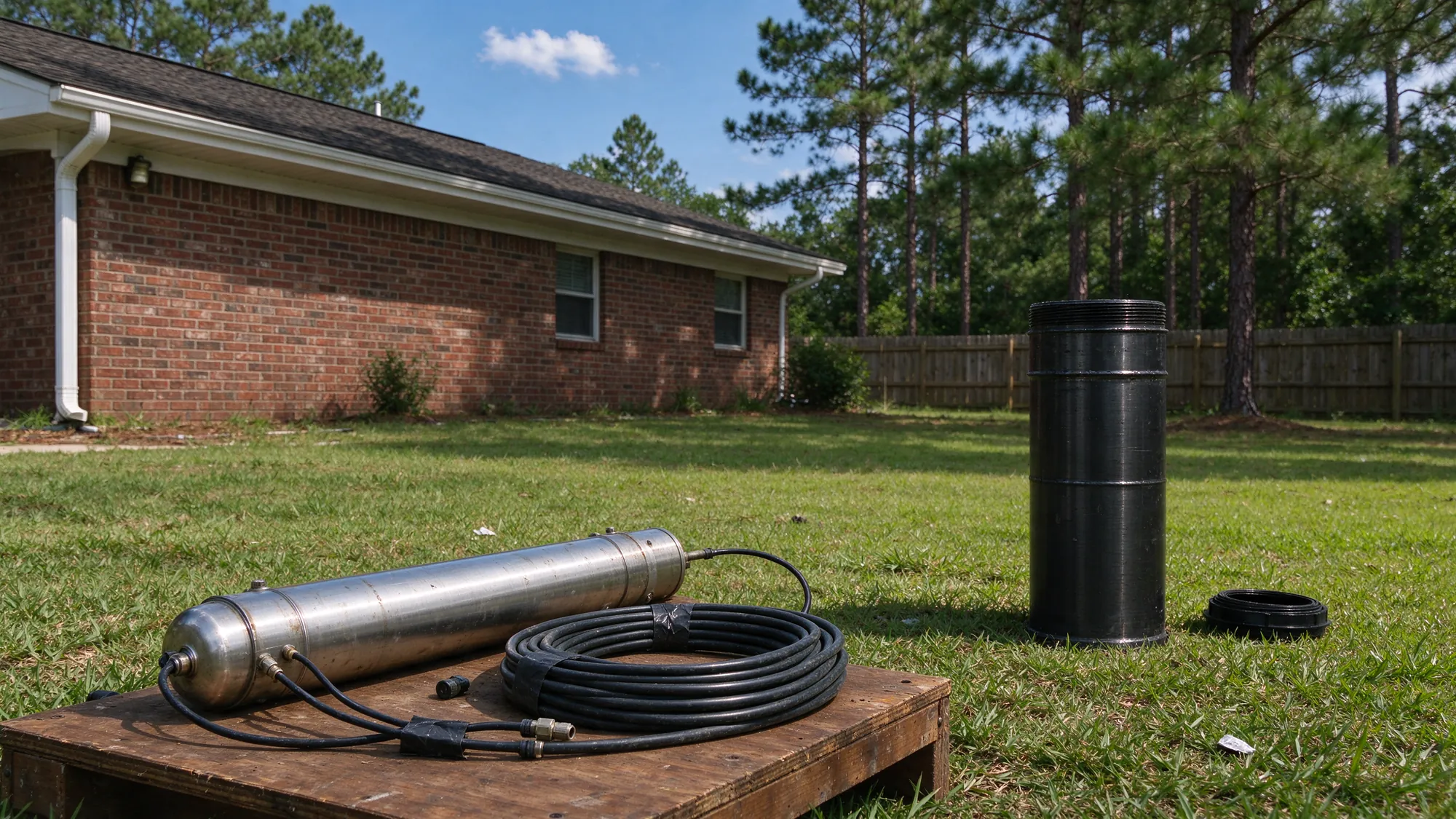
Wellborne repairs deep submersible well pumps across Suffolk and the surrounding area, the type of pump that serves most Suffolk homes. In a Virginia Cooperative Extension clinic of 204 Suffolk households, the average reported well depth was 371 feet. At that depth, a submersible hangs far down inside the casing, and the most useful thing a repair visit can do is find out whether the fault is down there at all.
The surface tests that decide everything
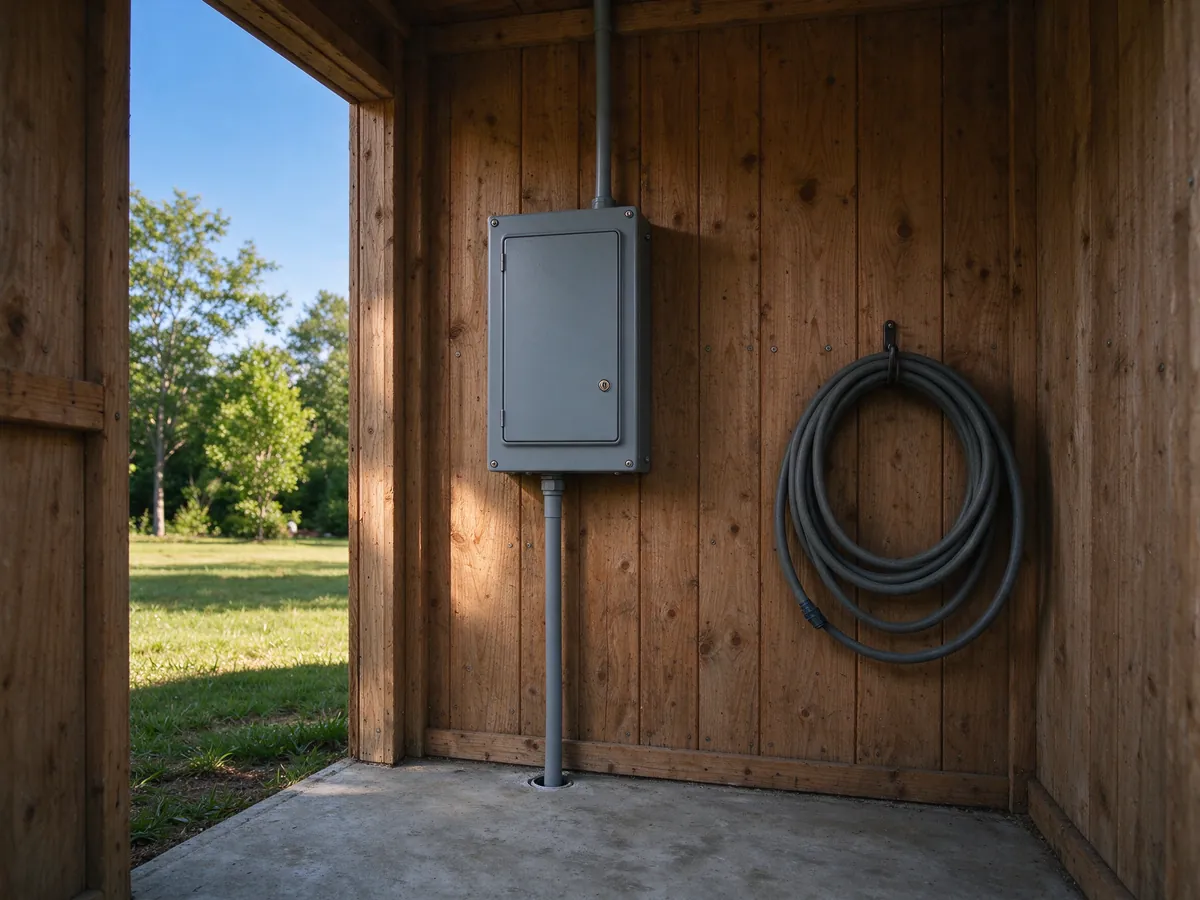
Many submersible failures turn out to be above ground. A three-wire pump depends on a start capacitor and a relay in the control box on the wall; when either fails, the motor hums or does nothing, exactly like a dead pump. A pressure switch with pitted or welded contacts can stop the pump from starting or stop it from shutting off. A breaker weakened by repeated trips can drop out under the pump’s starting load.
So every visit starts at the surface. We read the voltage at the switch with the pump running and at rest, measure the amp draw on each leg, and test the control box parts. An insulation test with a megohm meter on the motor leads, done from the surface, shows whether the motor windings or the cable down the well are breaking down. Those readings sort the fault into one of three places: the controls, the wire, or the pump itself.
Wire, splices and voltage drop
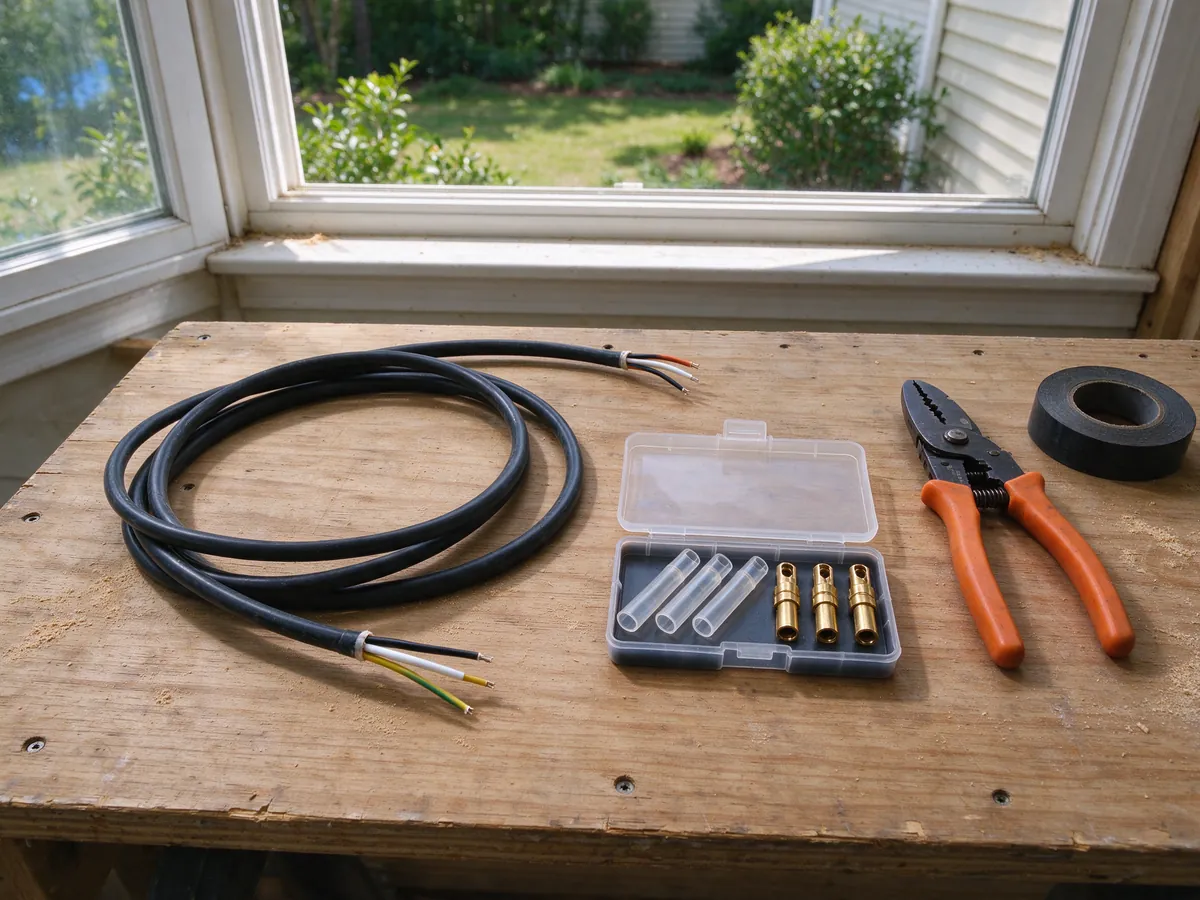
Between the control box and the motor runs a long cable, spliced to the motor leads just above the pump. On a 350-foot setting, that is a lot of wire. Splices are the weak point: a splice that lets in water corrodes, leaks current to ground and eventually shorts. The symptoms are a breaker that trips the moment the pump starts, or a pump that starts some days and not others.
Voltage drop matters too. Wire that is too small for the depth and the motor starves the pump of voltage, so it draws more current and runs hot. When a pump is replaced with a larger motor, or reset deeper, the cable size has to be rechecked against the new length and load.
When the pump has to come up
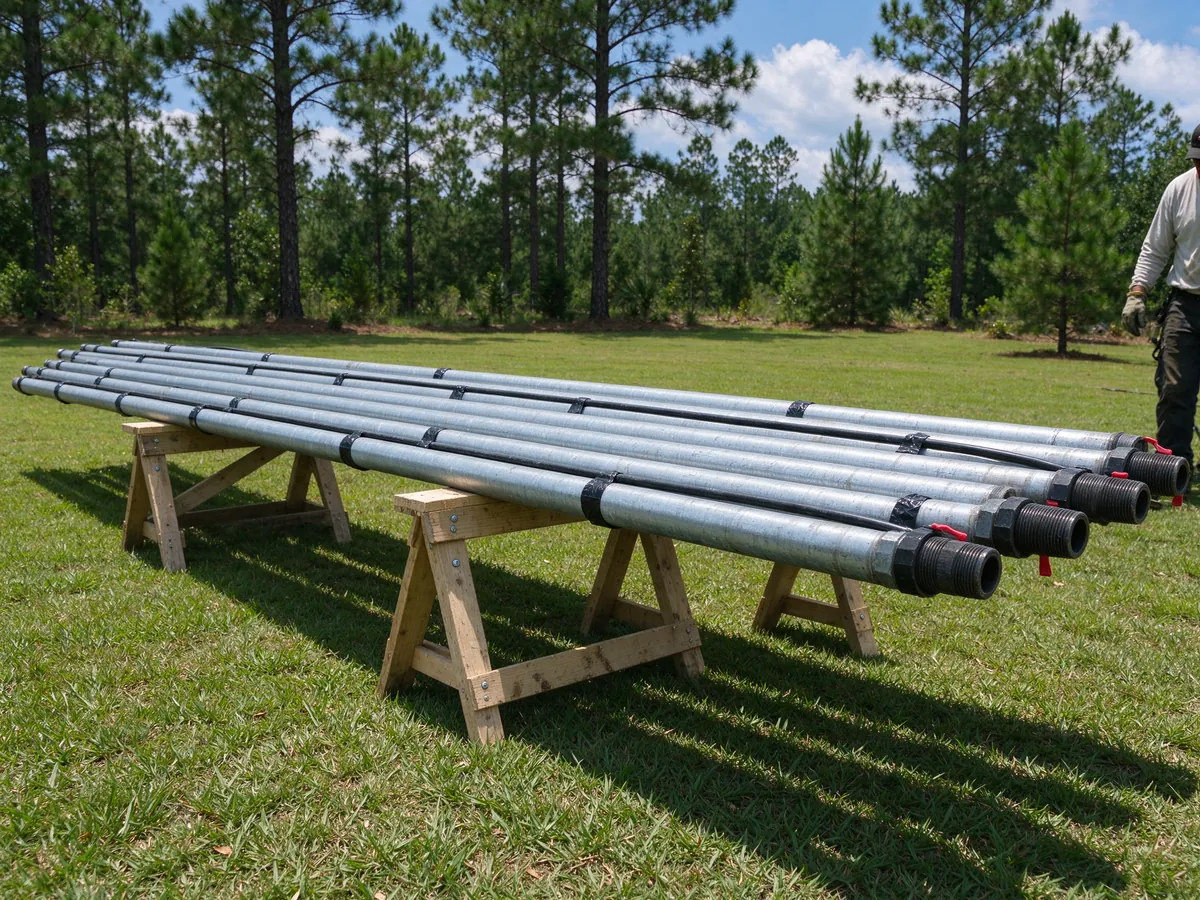
If the tests point down the well, the pump is pulled. The drop pipe is unthreaded or unclamped section by section, or reeled up if it is flexible pipe, with the cable taped to it. With hundreds of feet of water-filled pipe, a pump hoist or pulling rig does the lifting.
Once it is out, everything gets looked at:
- Check valves. A leaking check valve lets the water column drain back, so the pump restarts more often and can start against a reverse spin.
- Drop pipe and couplings. A split pipe or cracked coupling sends water back down the well, so the pump runs and the pressure never builds.
- The pump end. Worn impellers and diffusers, often from sand, cut the pump’s output while the motor still runs.
- The motor. Insulation readings and a spin test decide whether the motor is sound.
Repair or replace once it is out
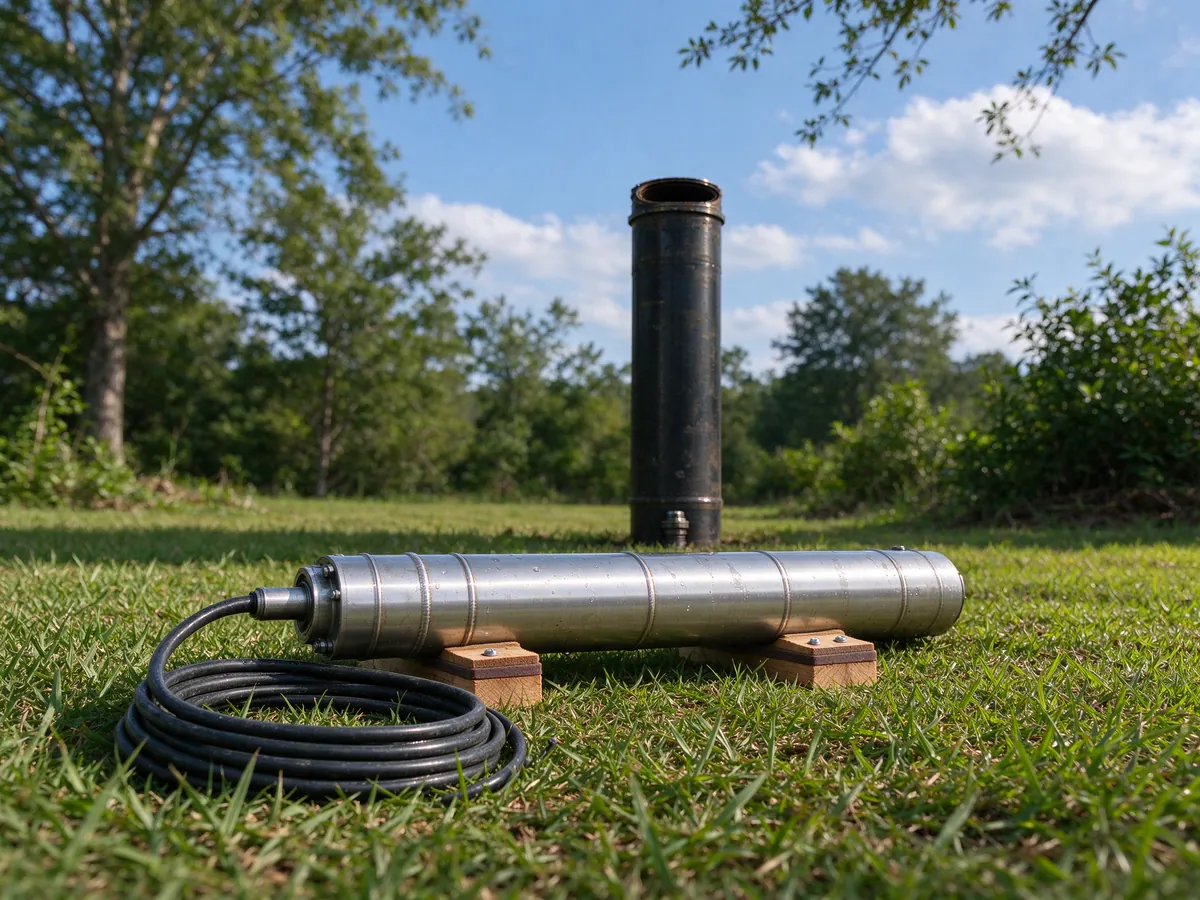
A submersible is two parts bolted together: a motor and a pump end. Sometimes one can be replaced without the other, but on an older unit with a worn pump end and a tired motor, a complete new pump is usually better value, because pulling it twice costs more than the parts. The deciding factors are the motor’s insulation reading, the pump’s output against the well’s needs, and the age and condition of the pipe and wire that come up with it.
Whatever goes back down is sized to the well. The static and pumping water levels are measured while the pump is out, and the pump setting is checked against them. A pump set too close to the pumping level draws air in a dry summer; one set too close to the bottom pulls sand.
Constant pressure and soft-start options
Many deep-well owners replacing a pump also consider a constant pressure drive. It ramps the motor up gently, holds steady pressure, and reduces the hard starts that stress wire and splices. It needs a compatible motor and the right cable, so the time to decide is while the pump is out.
After the repair
Pulling a pump opens the well to the surface. Virginia’s private well rules require a well to be disinfected before it is placed back in service, and we disinfect and flush before the water is used. A bacteria sample from a cold tap after the chlorine has cleared confirms the result. Replacing a pump or its parts does not require a Virginia Department of Health well permit, and the work is carried out by water well systems providers certified through DPOR.
Lightning, surges and generators
Hampton Roads summers bring frequent thunderstorms, and a submersible’s long cable acts like an antenna. A nearby strike or a surge when the power returns can kill a start capacitor, a relay, a pressure switch or, in the worst case, the motor’s insulation. After a storm, the order of checks is the same as always: breaker, switch, control box, then an insulation test on the motor and cable. Surface parts are replaced first; only a failed insulation reading justifies pulling the pump.
Running a submersible on a portable generator is another source of trouble. A pump motor draws several times its running current to start, and a generator too small for that load stalls the motor or delivers low voltage that overheats it. If you rely on a generator during outages, its starting capacity has to match the pump.
What to note before you call
A few observations make the first visit faster and the diagnosis surer:
- The pressure gauge. Zero, slowly climbing, or stuck at one reading.
- The breaker. Tripped, and whether it trips again immediately or after a few minutes.
- The sound. A hum from the control box or the pressure switch clicking.
- The timing. After a storm, an outage, a long irrigation run, or with no obvious cause.
- The records. Any well record, pump tag or old invoice showing the depth and pump size.
None of that requires opening anything electrical. If the pump is running with no water reaching the house, switch off its breaker to protect the motor until it can be tested.
What is included
- Amp draw and voltage at the switch or control box
- Megohm (insulation) test on the motor leads and drop cable
- Control box capacitor and relay tests on three-wire pumps
- Pull, inspection and reset of pipe, cable and check valves
- Splice replacement with heat-shrink or resin kits
- Motor or pump end replacement where testing condemns it
- Water level measured while the pump is out
- Disinfection and a full-cycle test before use
Choosing between the options
| Fault found | Where it is | Typical fix | Pull needed? |
|---|---|---|---|
| Failed start capacitor or relay | Control box (three-wire) | Replace the part | No |
| Pitted pressure switch contacts | At the tank | Replace the switch | No |
| Damaged splice or cable | In the well | New splice or cable run | Yes |
| Leaking check valve | On the drop pipe | Replace valve | Yes |
| Shorted or seized motor | In the well | New motor or complete pump | Yes |