Last Updated: November 5, 2026
Wellborne repairs well pump pressure switches and control boxes across Suffolk and the surrounding area. These are the small, inexpensive parts that decide when the pump runs, and they fail far more often than pumps do. Testing them first is what keeps a lot of “dead pump” calls from becoming pump replacements.
The pressure switch
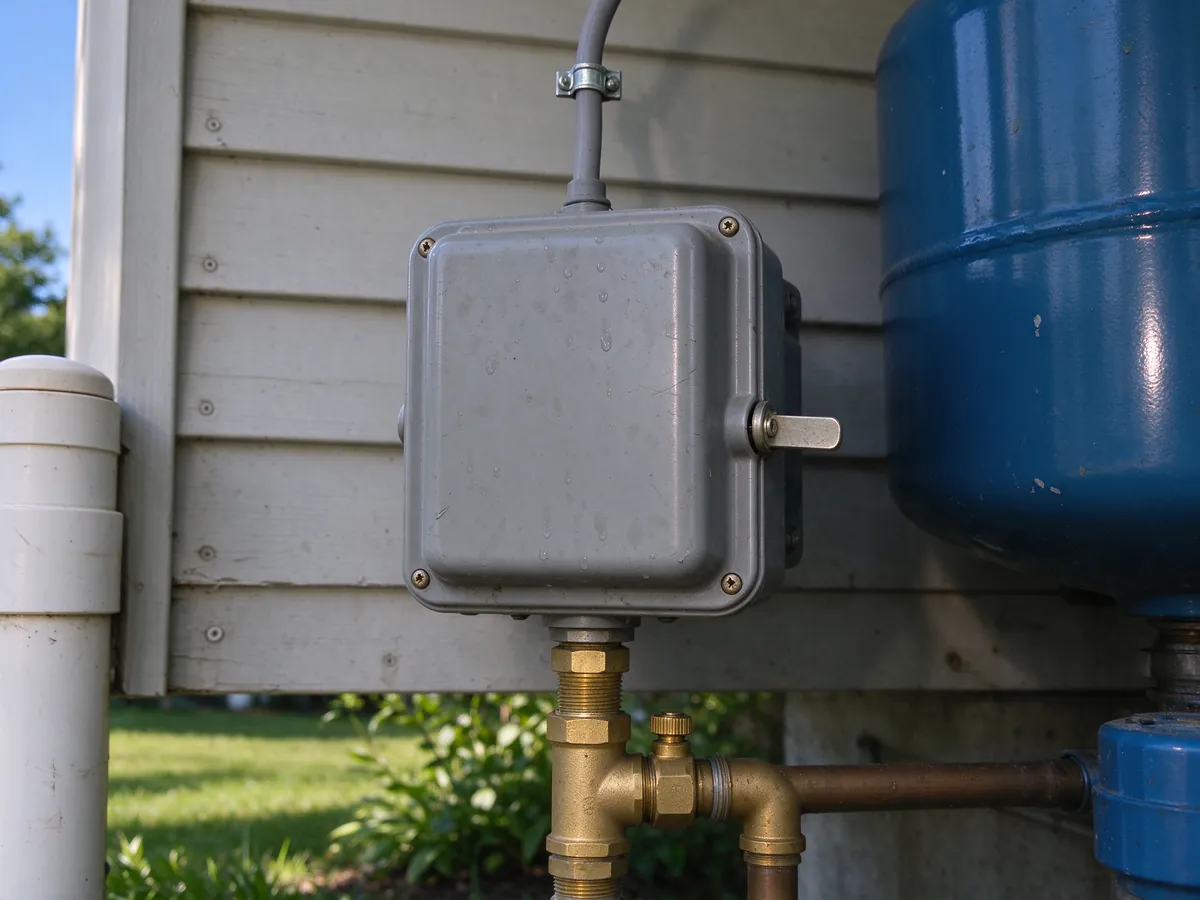
The pressure switch sits on the tank tee or the pipe near the tank, sensing water pressure through a small port. When pressure falls to the cut-in setting, its contacts close and start the pump; at cut-out, they open and stop it. Residential switches are commonly set at 30/50 or 40/60 psi.
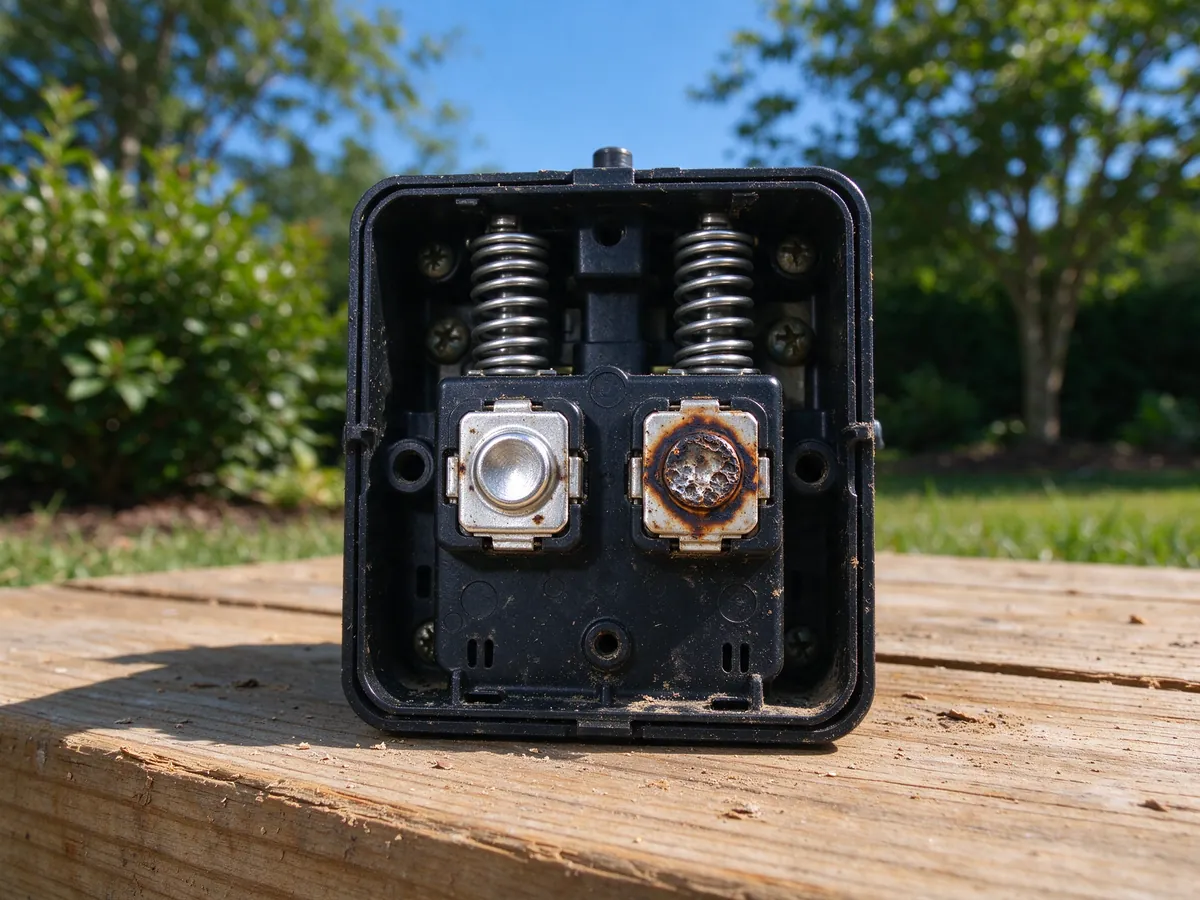
The contacts carry the pump’s full current every time it starts, and they wear. Pitted or burned contacts stop the pump starting; welded contacts stop it shutting off. The sensing port and the small pipe nipple it sits on clog with sediment and iron, so the switch reads pressure late or chatters on and off. A switch that chatters burns out quickly and wears the pump’s starter as well.
The low-pressure cutoff
Many well switches have a lever on the side that cuts the pump off if pressure falls far below cut-in, for instance when the well runs dry or a pipe bursts. It protects the motor from running without water. After a power outage, a big leak or a dry spell, it can leave the pump off until it is reset by holding the lever up while pressure builds.
If the cutoff trips repeatedly, it is doing its job: something is pulling pressure down. A falling water level, a broken line or a failing pump is the real problem.
The control box
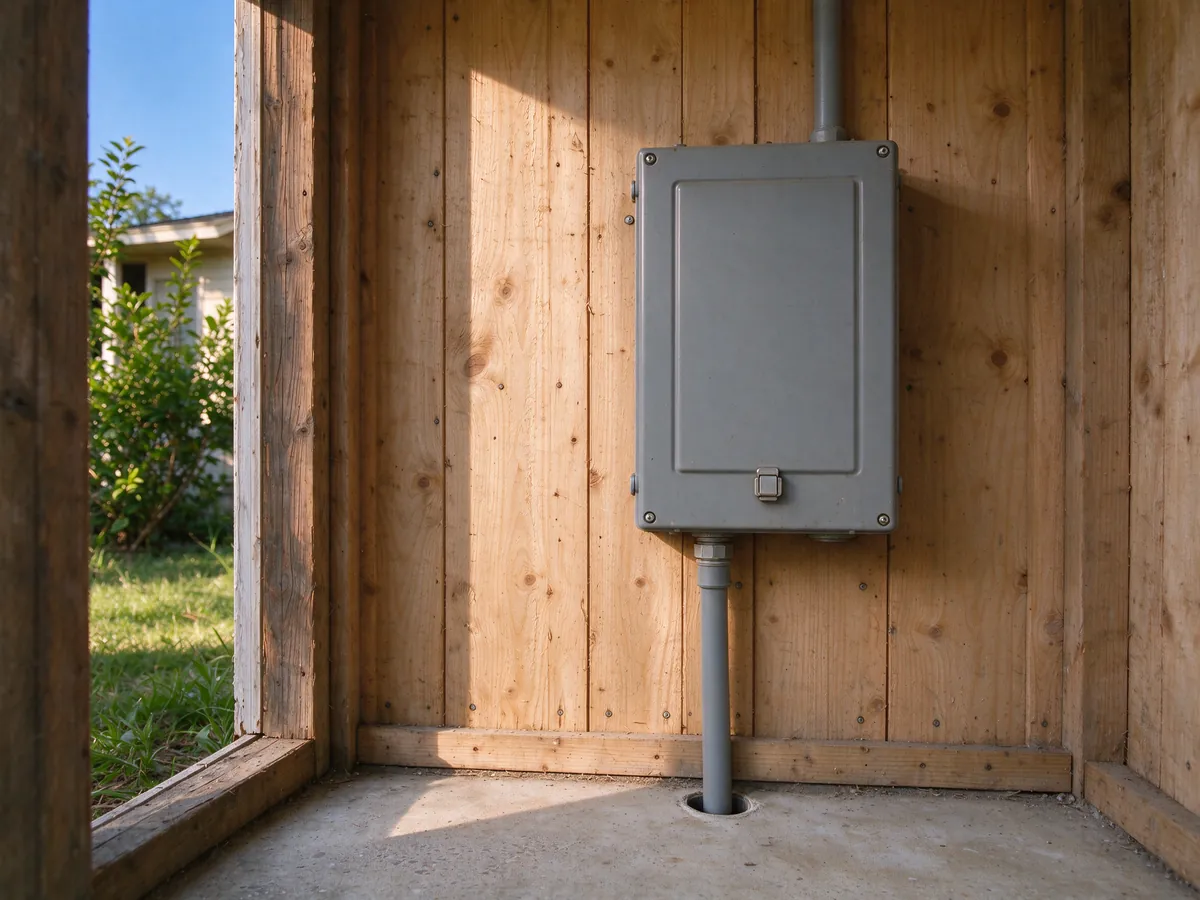
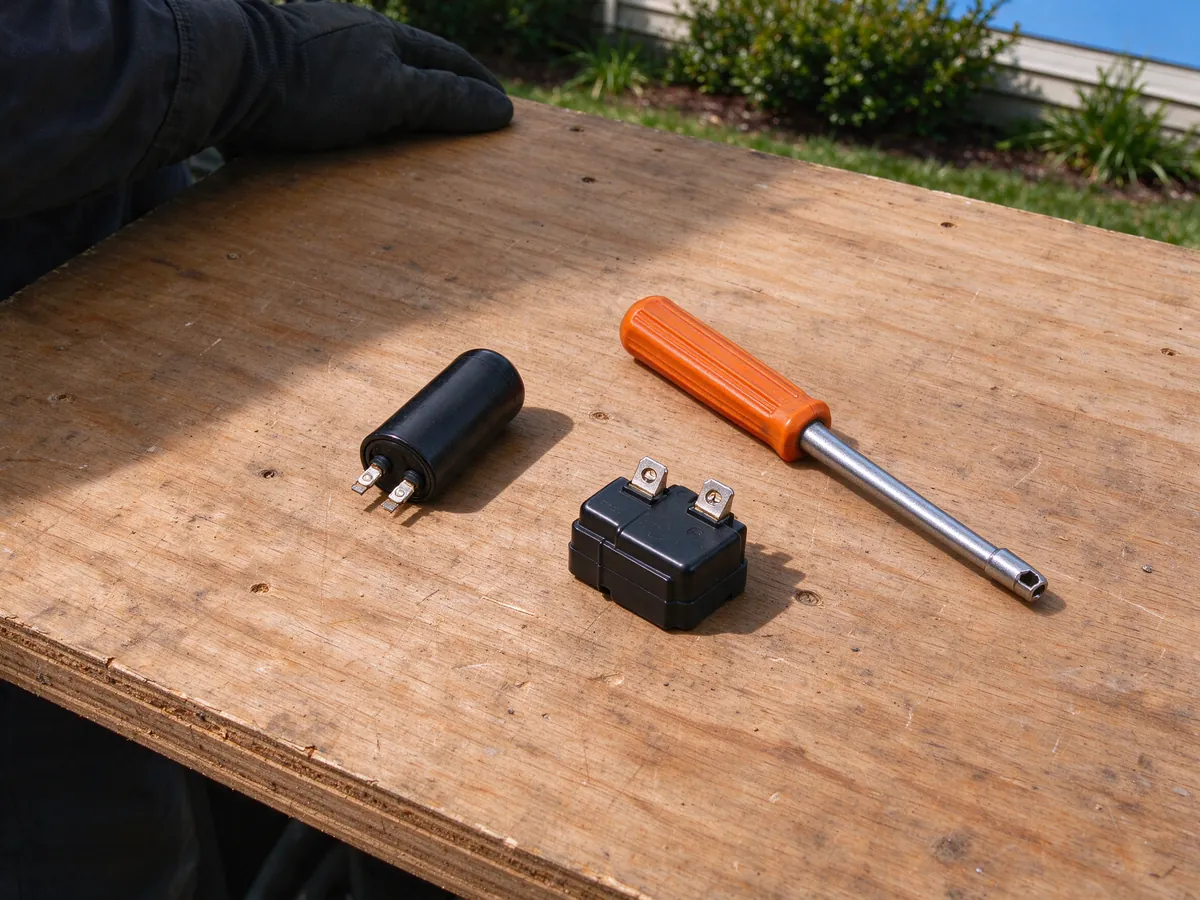
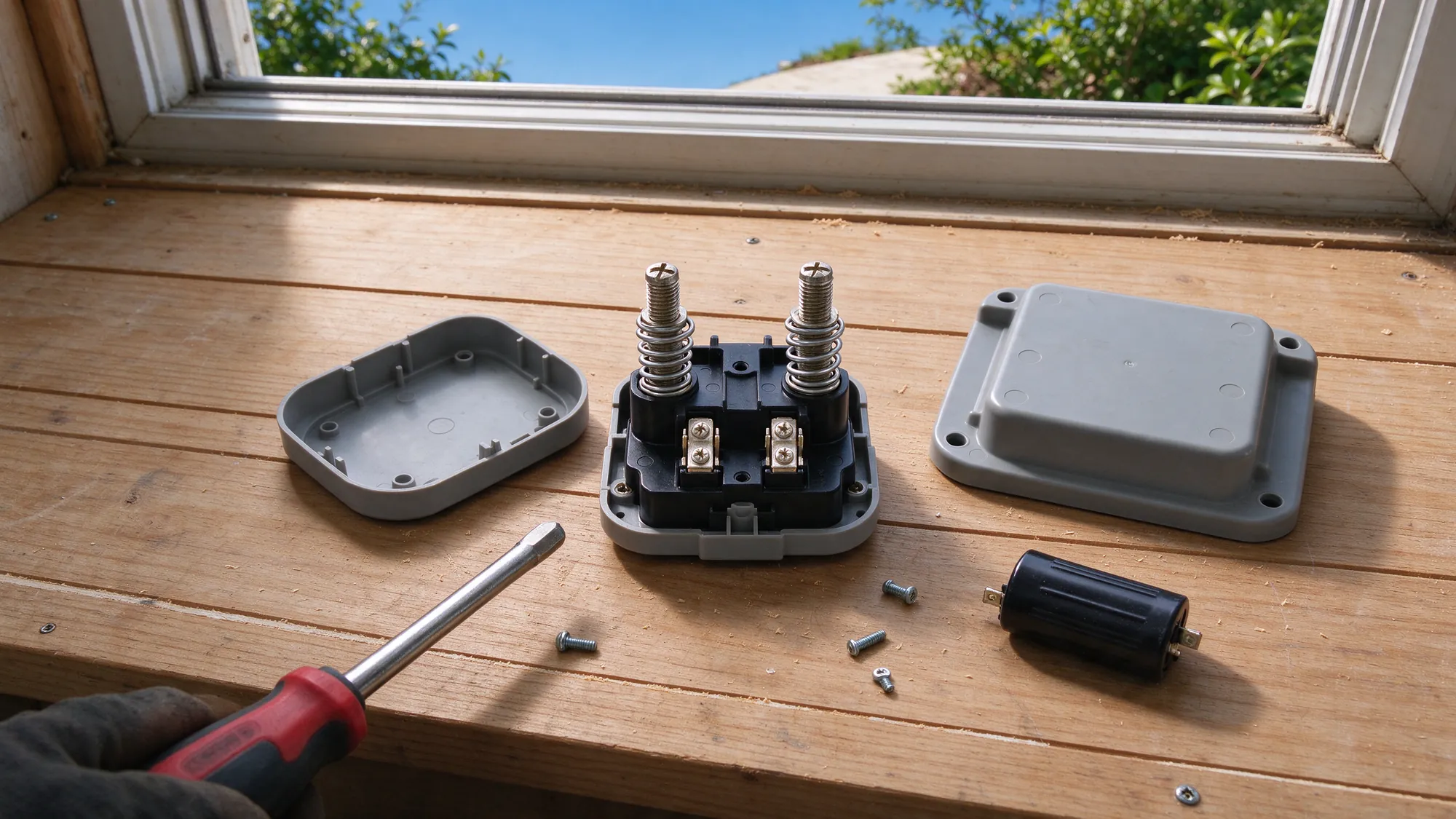
Three-wire submersible pumps start through a control box on the wall. Inside are a start capacitor, a relay that drops the capacitor out once the motor is running, and on larger pumps a run capacitor and overload protection. Two-wire pumps carry these parts inside the motor, so they have no box.
Start capacitors fail, often after a surge or a lightning strike nearby, or simply from age and heat. The pump then hums without turning, or trips its overload. Relays stick. These parts are replaced at ground level, and the control box itself is replaced with one matched to the motor’s horsepower and voltage; a mismatched box can damage a good motor.
How the faults are found
Every visit starts with power isolated and the covers off only when it is safe. We read voltage at the switch and the control box, measure amp draw when the pump is called to run, test the capacitors and relay, and inspect the contacts and the sensing port. The pressure range is checked against the tank’s air charge, because a switch set out of step with the tank causes its own cycling.
Those readings separate a controls fault from a pump fault. If the controls test good and the motor draws no current, or reads shorted on an insulation test, the fault is down the well and a submersible pump repair follows.
Surges, lightning and storms
In Hampton Roads, summer thunderstorms are a common cause of switch and control box failures. A strike nearby can send a surge down the power line or the well cable. After a storm, the switch contacts, the capacitor and the relay are checked first, and a lightning arrester at the control box or panel can reduce future damage.
Wiring and the panel
The pump usually runs on its own 240-volt circuit with a double breaker. A breaker that trips at start-up may be weak from years of trips, or may be reacting to a real fault in the capacitor, the wiring or the motor. Wiring at the house falls under the local electrical code, so larger changes, such as moving a control box or adding a new circuit, may need an electrical permit for the address.
Upgrading the controls
When the switch and box are being replaced anyway, it is worth asking whether a different arrangement suits the house better: a switch with a low-pressure cutoff where none existed, a wider pressure range for a larger tank, or a constant pressure controller in place of the switch altogether. Each has trade-offs, and the right answer depends on the pump, the well and how the house uses water.
Signs the switch is the problem
- Clicking without starting. The switch clicks but the pump never runs, often from contacts that no longer close cleanly.
- Chattering. A rapid buzzing click at cut-in or cut-out, usually a clogged sensing port or a failing tank.
- No shut-off. The gauge reaches cut-out and keeps climbing, or the pump runs on at a steady pressure.
- Black or melted contacts visible with the power off and the cover removed.
- A reset that does not last on a switch with a low-pressure cutoff.
Settings and the tank work together
The switch and the tank are a pair. The tank’s air charge sits about 2 psi below the switch’s cut-in, so the tank empties just as the pump starts. Change the switch from 30/50 to 40/60 without changing the tank charge, and the tank delivers less water and the pump cycles more. Raise the settings beyond what the pump can produce at your well’s depth, and the pump never reaches cut-out and runs on. Whenever a switch is replaced or adjusted, the tank charge is checked against it.
How long these parts last
Switches and capacitors are wear items. A switch on a system that cycles normally can last many years. One on a short-cycling system, or exposed to damp and iron-laden water, fails much sooner. Capacitors age with heat and surges. Replacing a worn switch before it fails costs little, and avoids the cold-shower morning when it finally sticks.
Who does the work
Switch and control box repairs are carried out by water well systems providers certified through DPOR, Virginia’s licensing department. No Virginia Department of Health well permit is involved, because nothing in the well itself is altered. Larger electrical changes at the house, such as a new circuit, follow the local electrical code for the address.
What is included
- Voltage and amp readings at the switch and control box
- Contact inspection and switch replacement
- Cleaning or replacing the switch nipple and tank tee
- Start capacitor, run capacitor and relay tests
- Control box replacement matched to the motor
- Low-pressure cutoff setting where fitted
- Pressure range set against the tank charge
- Full-cycle test
Choosing between the options
| Symptom | Usual cause | Fix |
|---|---|---|
| Pump will not start, gauge low | Burned or pitted switch contacts | New switch |
| Pump will not stop | Welded contacts or clogged sensing port | New switch, clean or replace the nipple |
| Pump hums, no water | Failed start capacitor or relay | Replace the control box part |
| Pump off after an outage | Low-pressure cutoff tripped | Reset and find why pressure fell |
| Breaker trips at start | Shorted capacitor or wiring fault | Test and replace the failed part |