Last Updated: November 6, 2026
Wellborne restores weak and declining wells across Suffolk and the communities within about 30 miles. A well that once kept up easily and now struggles has usually changed at the screen, where the water enters, rather than in the aquifer itself. Rehabilitation tries to bring that capacity back before anyone pays for a new well.
Is it the well or the pump?
The first job is separating a well problem from a pump problem, because they look the same at the tap. A worn pump delivers less water from a healthy well. A fouled well delivers less water to a healthy pump. The test that separates them measures the water level: where it stands at rest (static level), where it settles while pumping (pumping level), and how fast it returns afterward (recovery).
If the level holds up and recovers quickly but the pump’s output is low, the pump needs attention. If the level drops sharply and climbs back slowly, the well has lost its ability to deliver water, and rehabilitation is worth considering.
Why wells lose capacity
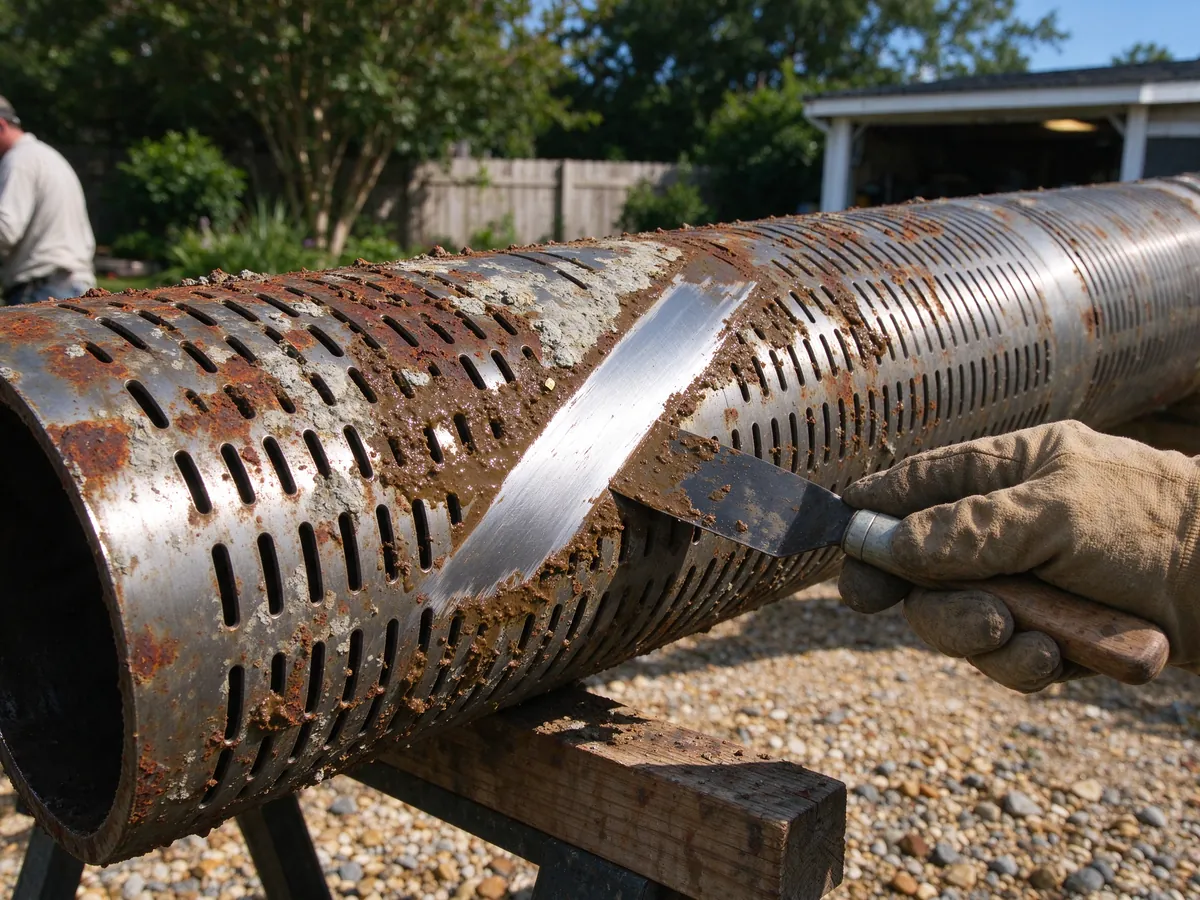
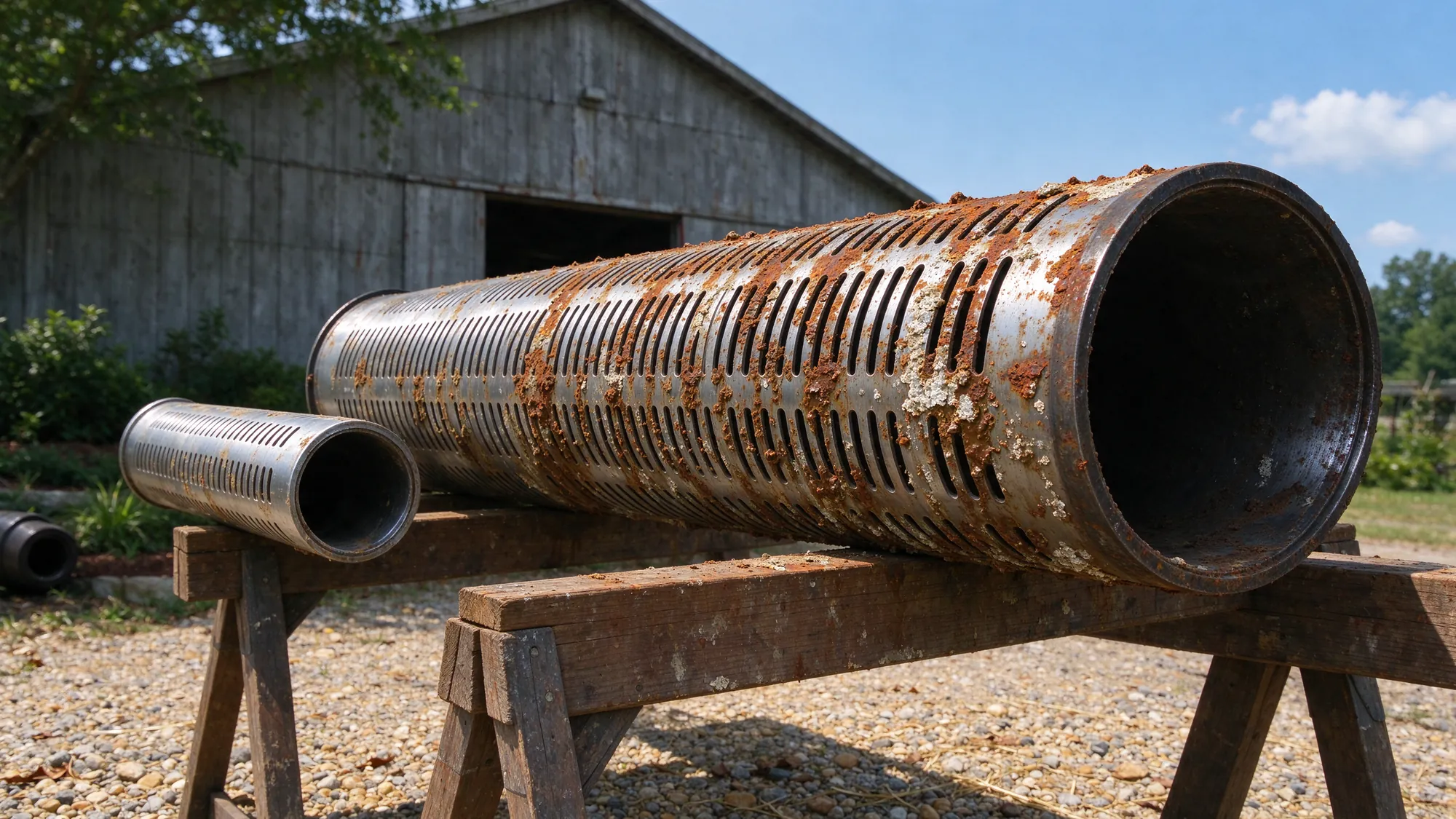
- Iron and bacterial fouling. Iron bacteria feed on dissolved iron and build up a slime that traps iron deposits on the screen and in the surrounding sand. It shows as orange or red slime in toilet tanks and a slow, steady fall in yield.
- Mineral scale. Hard water deposits calcium and other minerals on the screen, narrowing the openings.
- Sand and silt. Fine sediment packs into the gravel or sand around the screen, especially if the well was never fully developed or is pumped hard.
- Mechanical damage. A corroded or collapsed screen, or a cracked casing, which cleaning cannot fix.
Shallow wells in the surface sands tend to carry more iron than deep ones, so fouling is more common there, but deep wells foul too.
How rehabilitation is done
The pump comes out, and the well is measured to set a baseline. Then the methods are chosen to fit the cause:
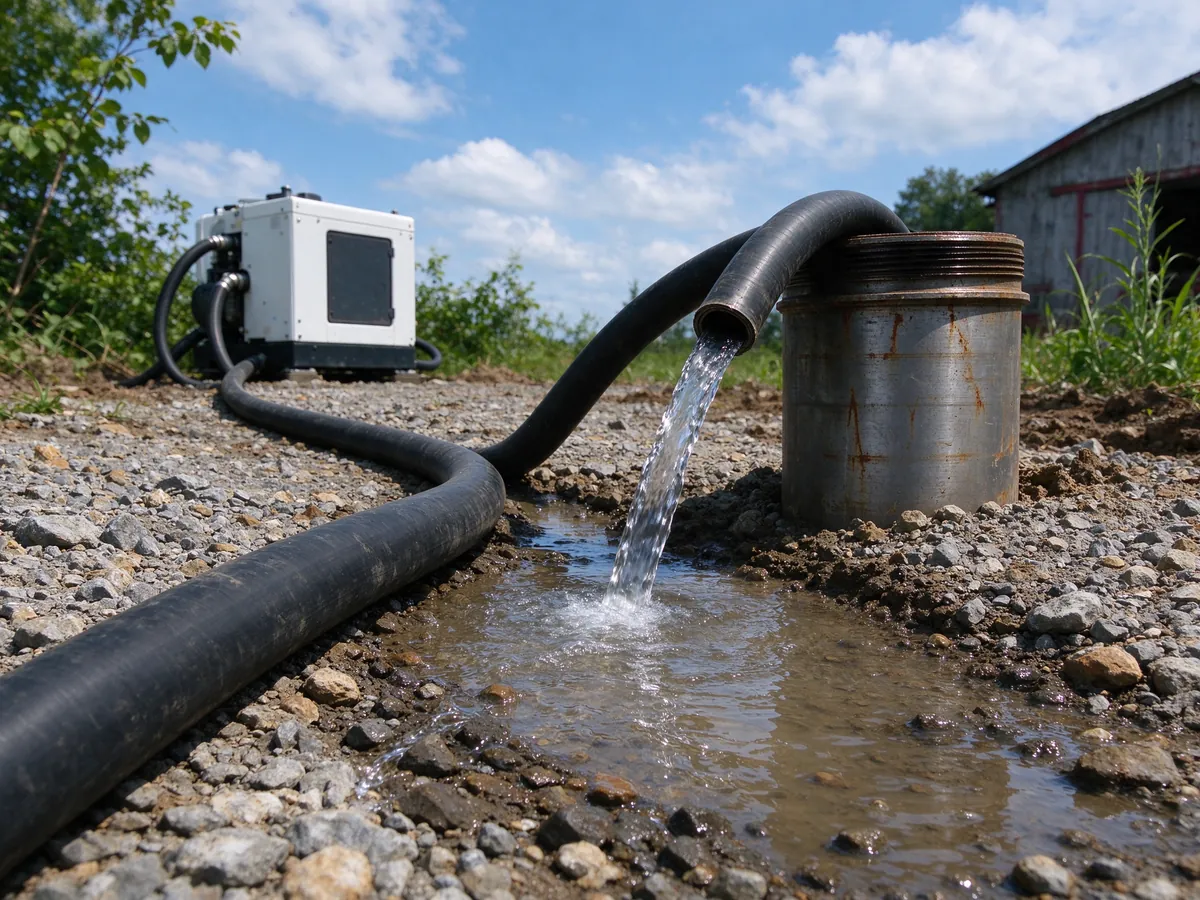
- Mechanical redevelopment. Surging a block up and down the screen, airlifting and bailing loosen packed sediment and pull it out of the well. This is the core of most rehabilitations.
- Chemical treatment. Products chosen for the problem dissolve iron deposits, mineral scale or bacterial slime, followed by more redevelopment to remove what they loosen.
- Disinfection. The well is chlorinated before it goes back into service, as Virginia’s private well rules require, and flushed until the water clears.
After treatment, the yield and water levels are measured again. Comparing them to the baseline shows what was gained.
When deepening makes sense
A well that is sound but draws from an aquifer that has become short of water or poor in quality may be deepened to reach a lower unit. Deepening needs a written VDH construction permit, like a new well. It is only possible when the existing casing and construction allow it and a useful aquifer is within reach below the current bottom.
In Suffolk that is not always straightforward. USGS mapping found the Yorktown-Eastover aquifer absent in the southwestern part of the city, so the next useful unit there may be much deeper. Deeper aquifers also tend to carry more sodium and natural fluoride. Near the coast, in Virginia Beach, USGS reports water below roughly 150 to 200 feet is too salty to use, so deepening can make things worse.
When a new well is the better answer
Rehabilitation cannot fix a cracked or collapsed casing, a failed grout seal, or a screen that has corroded through. Those let in surface water, sediment or both, and they usually mean a replacement well, with the old well properly sealed under VDH rules. A well drawing from a layer that has turned salty is also usually better replaced than treated.
Keeping a restored well healthy
A rehabilitated well that fouled once will foul again unless the cause is managed. Periodic treatment for iron bacteria, avoiding pumping the well harder than its yield allows, keeping the pump set correctly above the screen, and testing the water for iron and bacteria all slow the next decline. Measuring the water level whenever the pump is pulled builds a record that shows trouble coming early.
What to expect from the result
Results depend on what caused the decline and how long it went on. A well that fouled gradually over years often recovers a large part of its original output. A well with a damaged screen, or one that was never properly developed when it was drilled, may improve less. Measuring before and after means the result is a number, not a guess.
Who does the work
Rehabilitation and deepening are carried out by water well systems providers certified through DPOR, Virginia’s licensing department. Deepening requires a VDH construction permit.
Signs a well is declining, not just the pump
- Output fades during long use but recovers after the well rests overnight.
- The pump starts drawing air at the end of a long irrigation run or laundry day.
- Orange or red slime appears in toilet tanks, and the water smells musty or swampy.
- Sand or silt arrives at the taps where it never did before.
- A new pump did not help. Output stayed low after the pump was replaced.
Any one of those is a reason to measure the water level the next time the pump is out, rather than buying a bigger pump.
How well records help
A well’s completion report shows the yield and water levels measured when it was drilled. Comparing those with today’s figures shows how much capacity has been lost and how fast. Where there is no record, the first rehabilitation measurements become the record, and every later pump service adds to it. Owners who keep those numbers can see a decline years before it becomes a crisis.
Combining rehabilitation with treatment
Rehabilitation restores the well’s capacity; it does not change the water’s chemistry. If iron or hardness caused the fouling, a treatment system for the house, chosen from a lab test, protects the plumbing and appliances, and periodic well treatment keeps the screen clear. The two work together.
What is included
- Review of the well record and history
- Pump pulled and inspected
- Water level, drawdown and recovery measured
- Assessment of the screen and casing where possible
- Mechanical redevelopment (surging, airlifting, bailing)
- Chemical treatment matched to the fouling
- Disinfection and flushing
- Retest of yield against the starting figure
Choosing between the options
| Cause of decline | Sign | Usual approach |
|---|---|---|
| Iron or bacterial fouling of the screen | Orange slime, falling yield over years | Redevelopment plus treatment |
| Mineral scale | Hard deposits, gradual decline | Treatment to dissolve scale, then redevelopment |
| Sand or silt packed around the screen | Sand in the water, reduced flow | Surging and bailing |
| Worn pump, not the well | Yield fine on test, pump output low | Pump repair or replacement |
| Casing cracked or collapsed | Muddy water, debris, contamination | Replacement well and sealing the old one |