Last Updated: November 5, 2026
Wellborne inspects private wells across Suffolk and the communities within about 30 miles for home purchases, refinances and owners who simply want to know what they have. A well is the house’s whole water supply, and a sale is often the only time anyone looks at it closely.
What Virginia does and does not require
The Virginia Department of Health does not require a well inspection or a water test when a property with a private well changes hands. That surprises many buyers. In practice, lenders often require at least a water test, commonly for bacteria, nitrate and lead, and purchase contracts frequently include a well inspection contingency. VDH’s own guidance notes that those lender minimums may not give a full picture of the water.
So the scope of an inspection is set by what the lender requires, what the contract allows time for, and what the buyer wants to know.
The record search
Every inspection starts with what is on file. The local VDH office keeps well records: wells from 2003 on are in the department’s electronic system, records from 1990 to 2003 are on paper, and many wells older than 1990 have no record at all. A record can show the depth, casing, construction date and the yield measured when the well was finished. Where there is no record, the inspection measures or estimates what it can.
In a Virginia Cooperative Extension clinic of 204 Suffolk households, 18% of wells had been built before 1981 and 14% of owners did not know how deep their well was. An older or undocumented well is not necessarily a problem, but it deserves a closer look.
The wellhead and the site
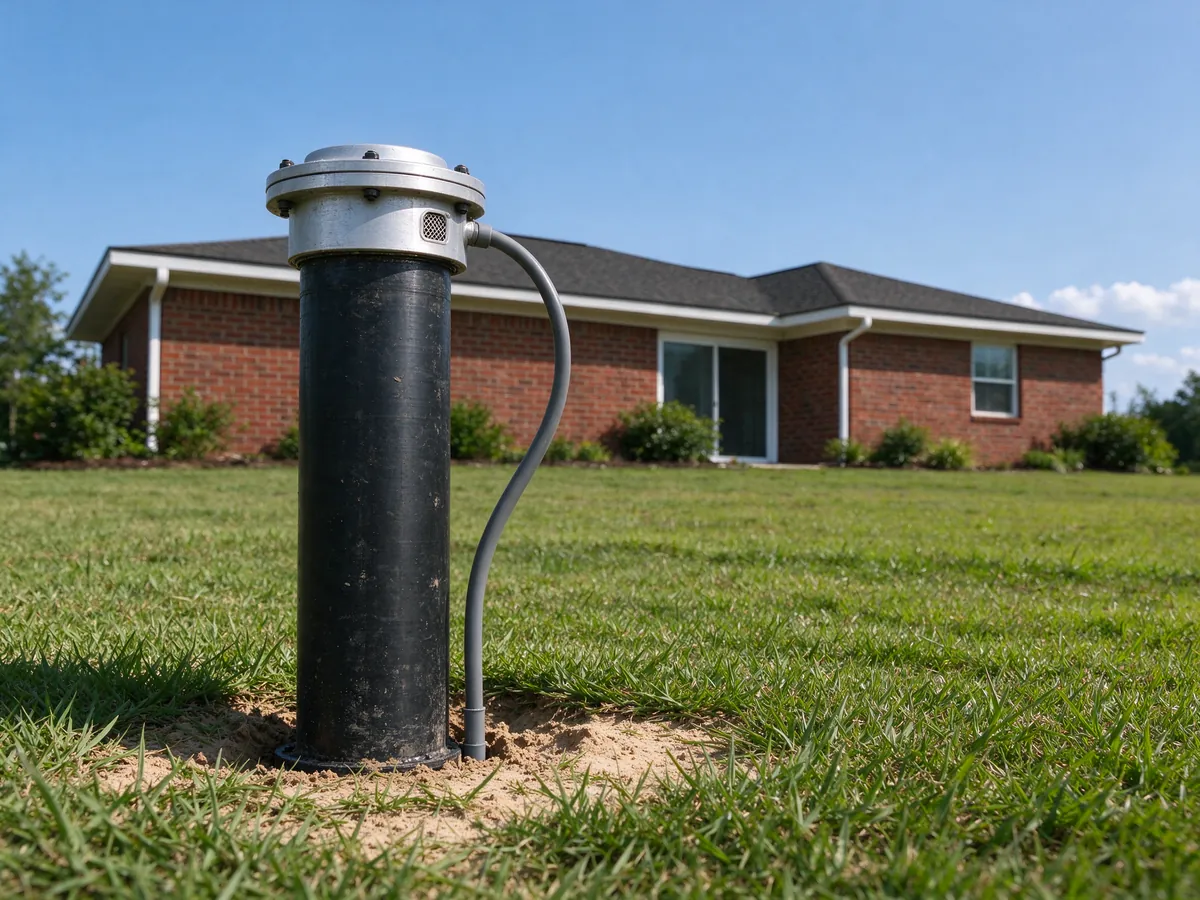
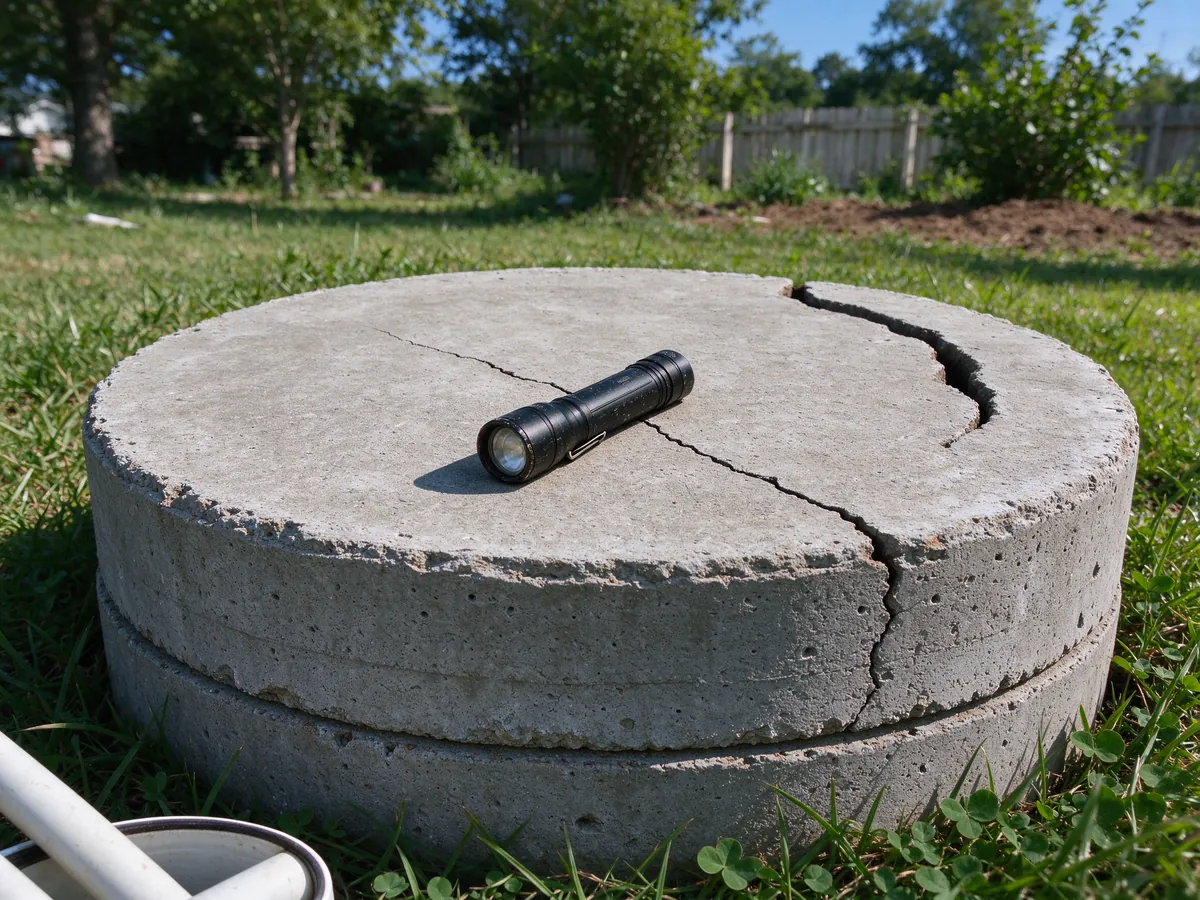
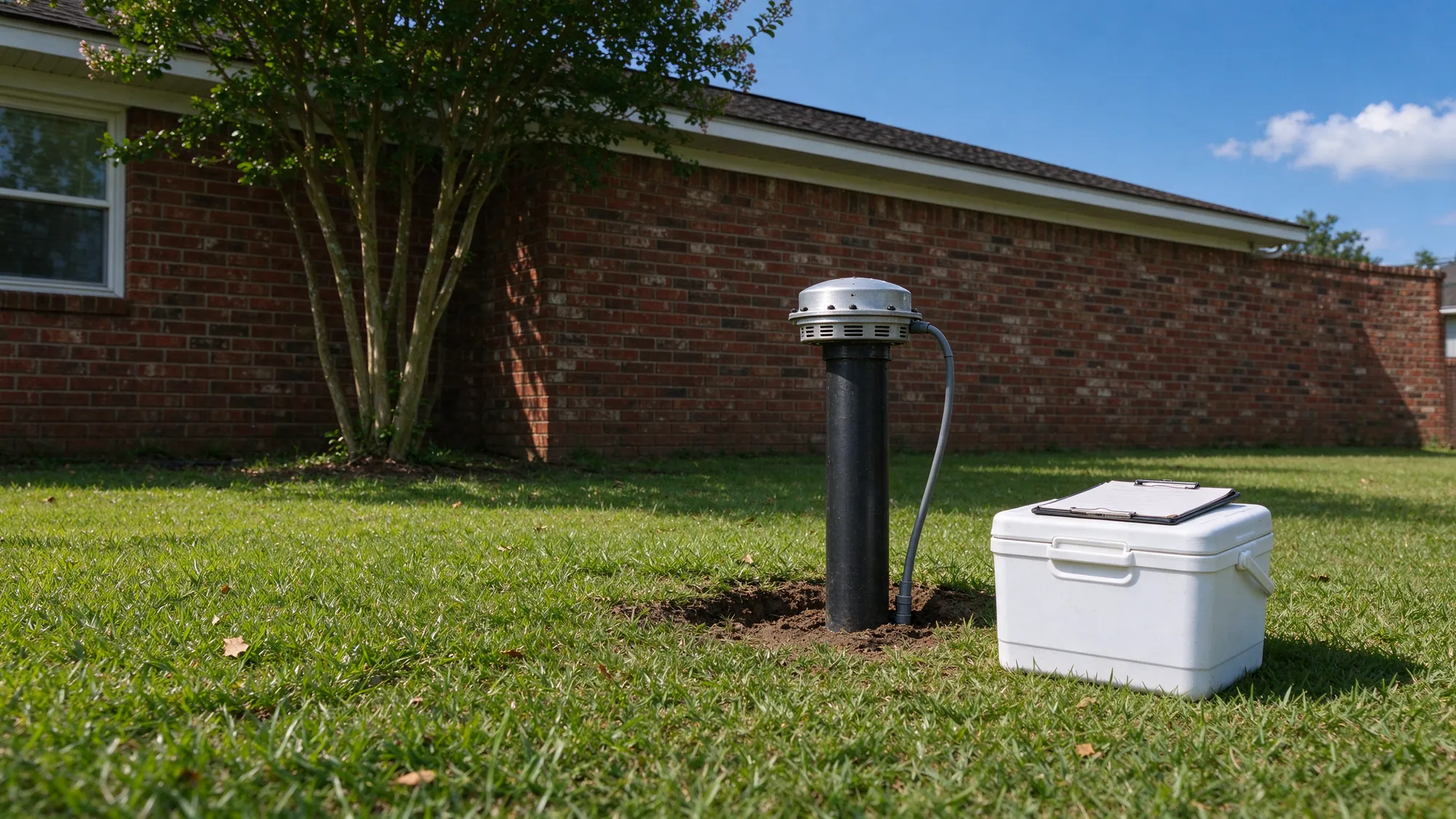
The top of the well is where contamination usually gets in. The inspection checks that the casing rises above grade, that the cap is sealed and vented properly, that the ground slopes away from the casing, and that nothing is stored or draining near it. Older bored wells with concrete or brick linings and loose covers get extra attention, because they draw from shallow water and are more exposed to the surface.
Setbacks matter too. Virginia’s private well regulations keep a well at least 50 feet from a septic tank and 50 or 100 feet from a drainfield depending on the well’s construction, and 15 feet from a building foundation. An inspection notes where those features are in relation to the well. Old wells may predate the current rules, but knowing the distances helps judge the risk.
The equipment
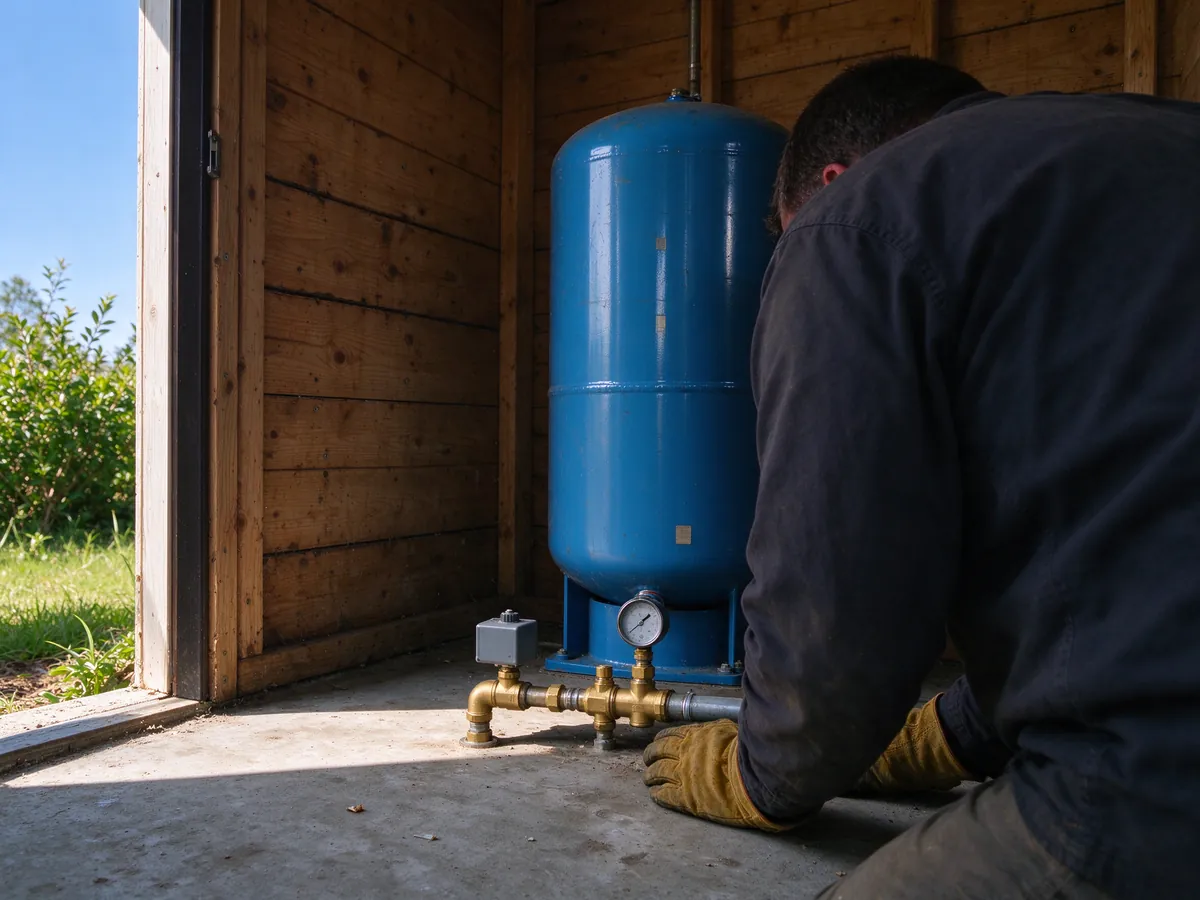
The pump, tank, pressure switch and control box are inspected for age, condition and how they work together. The system is run through several cycles: does the pump start at cut-in and stop at cut-out, how long does it run, does the tank hold its charge, does the switch chatter? A pump that runs constantly or a tank that is waterlogged is a near-term cost a buyer should know about.
A flow test at the tank or a fixture shows how much water the system delivers. For a larger household, a property with irrigation, or a farm, an extended test that pumps for longer while watching the water level shows whether the well itself can keep up.
The water
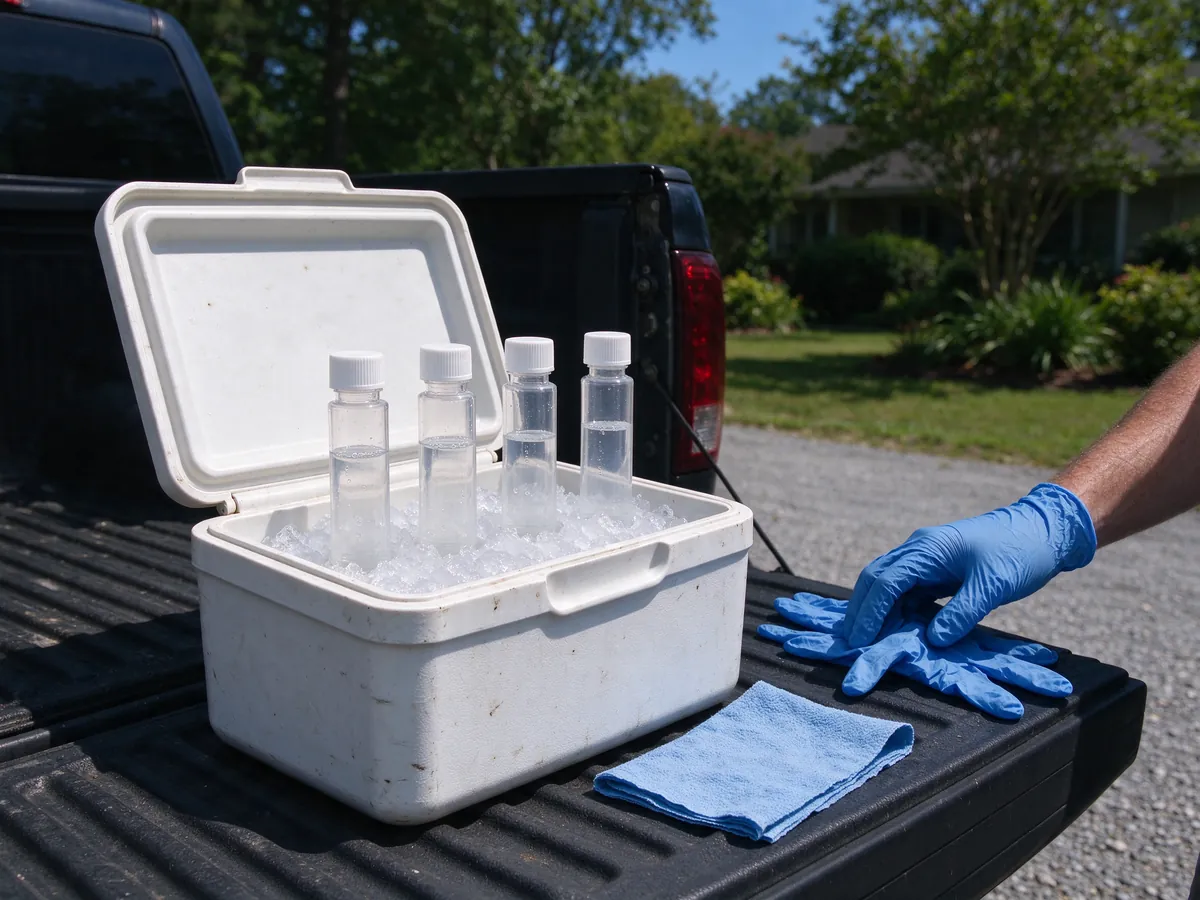
Water samples are collected and sent to a certified laboratory. The minimum is usually what the lender requires. For deep Suffolk wells, the extension clinic results argue for more: 19% of samples were above the federal fluoride limit of 4 mg/L and 78% had more than 20 mg/L of sodium, neither of which can be seen or tasted. Bacteria turned up in 21% of samples, usually a sign of a problem at the wellhead rather than in the deep water.
If the results show a problem, most can be corrected: disinfection and repairing the wellhead for bacteria, or treatment chosen from the lab results for fluoride, sodium, iron or hardness. Knowing before closing gives the buyer and seller something concrete to negotiate.
For sellers
Sellers can have the well inspected before listing, so there are no surprises during a buyer’s contingency period. Fixing a waterlogged tank, a failed switch or a cracked cap ahead of time is usually cheaper than negotiating over it under a deadline.
What the inspection cannot do
An inspection looks at what can be seen, tested and measured without pulling the pump. It cannot see the condition of the pump end, the drop pipe or the casing below ground, and it cannot predict exactly how long a pump will last. It reports what it finds and what it could not check, so a buyer knows the limits of the answer.
Who does the work
Inspections are carried out by water well systems providers certified through DPOR, Virginia’s licensing department, and water samples are analyzed by certified laboratories.
Questions to ask the seller
- How old are the pump, tank and switch, and who installed them? Invoices and pump tags help.
- Has the well ever run short of water, for example in a dry summer or during long irrigation?
- Has the water been tested, and when? Ask for the results, not just “it was fine”.
- Is there any treatment equipment, such as a softener, iron filter or reverse osmosis unit, and why was it installed?
- Is the well shared with a neighbor, and is there a written agreement?
- Are there other wells on the property, including old dug wells that are no longer used?
That last question matters because Virginia treats a well whose pump has been disconnected for any reason other than repair as abandoned, and an abandoned well is supposed to be properly sealed under VDH rules. An open old well on a lot is a safety and contamination risk worth knowing about before closing.
What the findings usually mean
Most inspections end with a short list rather than a verdict. A waterlogged tank, a worn switch or a cracked cap are modest repairs. A pump that runs constantly or a flow test that comes in well below the household’s needs points to bigger work, from a pump replacement to well rehabilitation. A bacteria result usually leads to disinfection and a wellhead repair, then a retest. A fluoride or sodium result leads to a treatment decision. Each finding comes with what it would take to address it, so the buyer can weigh it against the price.
What is included
- Well record search through the local health department
- Wellhead, casing, cap and grade around the casing
- Visible setbacks to septic tank, drainfield and structures
- Pump, tank, switch and control box condition and age
- Pressure cycle and run-time observation
- Flow test at the tank or a fixture
- Water samples collected for laboratory testing
- Written summary of findings
Choosing between the options
| Level | What it covers | Good for |
|---|---|---|
| Lender water test only | Bacteria, nitrate, lead as the lender asks | Meeting a loan condition |
| Standard inspection | Equipment, wellhead, flow, pressure, record search, basic water test | Most home purchases |
| Inspection plus full water panel | Above, plus fluoride, sodium, iron, manganese and more | Deep Suffolk wells and families with infants |
| Extended flow or recovery test | Longer pumping test with water levels | Large households, irrigation or farm use |