Last Updated: November 5, 2026
Wellborne tracks down low and pulsing water pressure on wells across Suffolk and the communities within about 30 miles. Low pressure feels like one problem, but it is really three different things: pressure, flow and the well’s yield. Each has different causes, and the fix depends on which one is short.
Pressure, flow and yield
Pressure is the push behind the water, measured in psi on the gauge at the tank. It swings between the switch’s cut-in and cut-out, commonly 30/50 or 40/60. Flow is how much water arrives at a tap per minute, which depends on pressure and on everything the water passes through. Yield is how much water the well itself can supply over time without the level falling to the pump.
A house can have good pressure at the tank and poor flow at the taps because of a clogged filter. It can have good flow for five minutes and poor flow after an hour of irrigation because the well’s yield is limited. Measuring each one separately is the only way to know which you have.
The easy causes come first
Most low-pressure calls are solved without touching the pump:
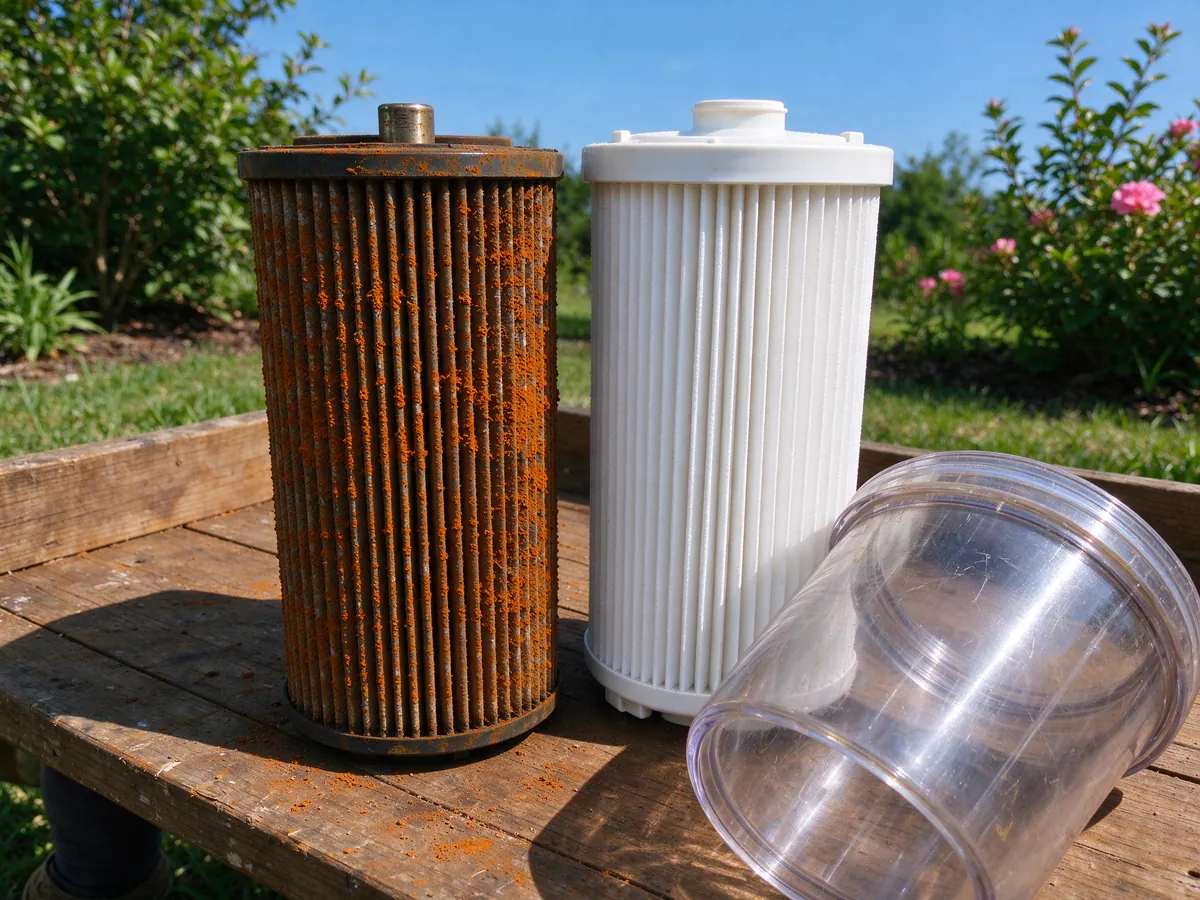
- Filters and treatment. A sediment cartridge clogged with sand or iron, a softener with a fouled resin bed, or an iron filter overdue for backwashing can cut flow dramatically. In parts of the region where shallow water carries iron, this is the most common cause.
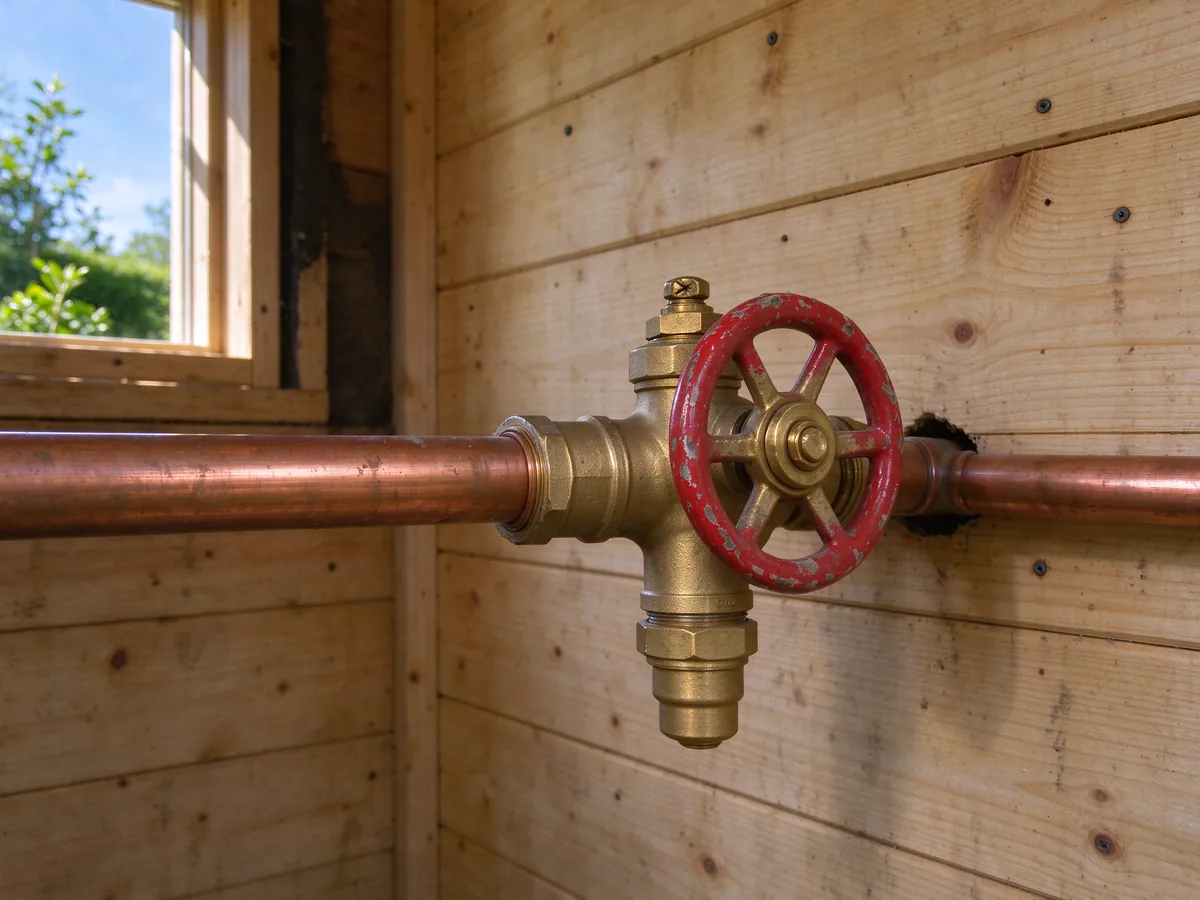
- Valves. A gate valve partly closed after plumbing work, or one whose gate has dropped inside, restricts everything downstream.
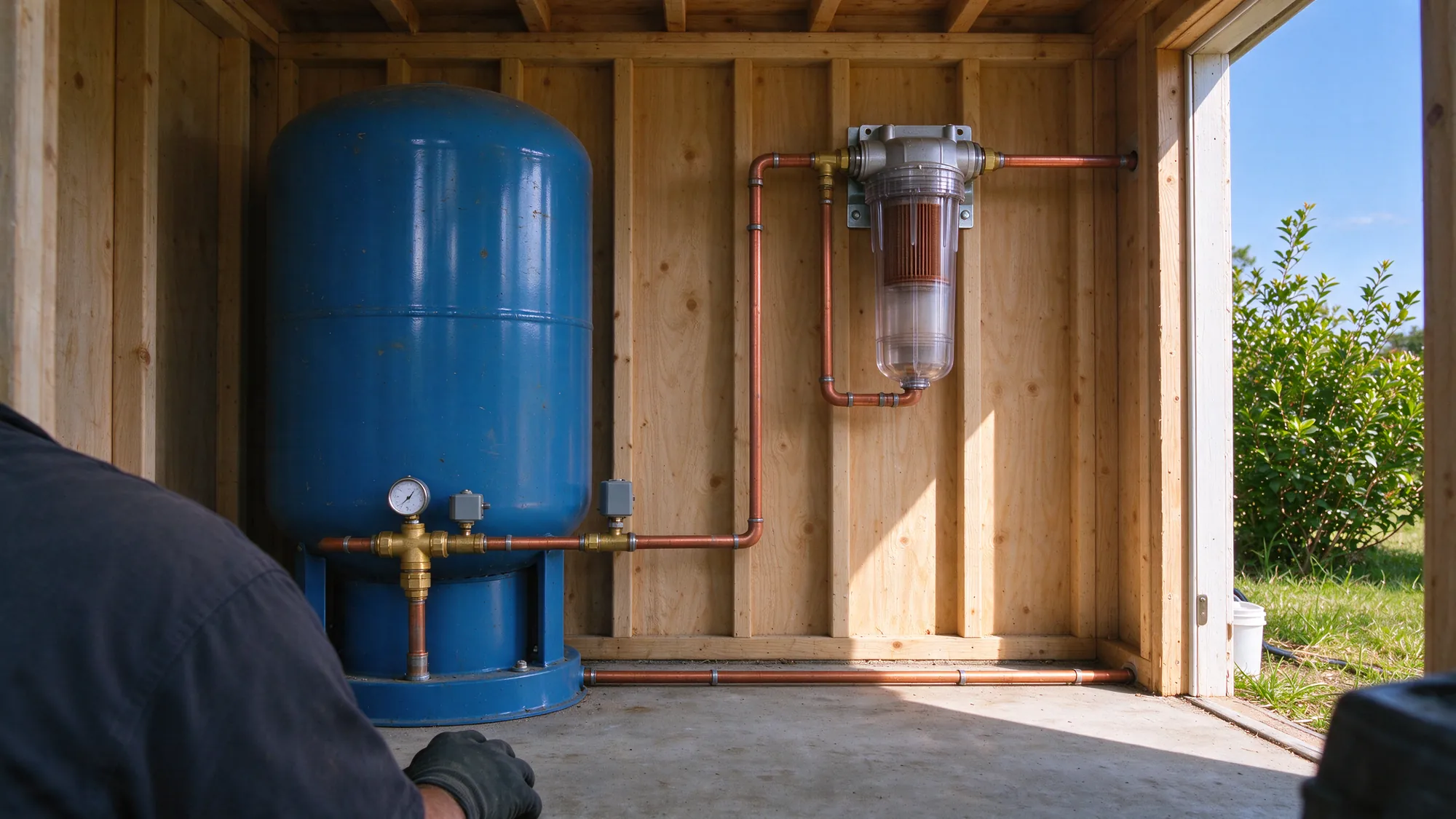
- The tank. A waterlogged or undercharged pressure tank gives strong-weak-strong pressure and short cycling.
- The switch. A clogged sensing port makes the switch start late, so pressure dips below the setting before the pump catches up.
- Leaks. A leak in the buried line from well to house steals water and pressure and keeps the pump running.
When the pump is the limit
If the easy causes are ruled out and the pressure still never reaches cut-out, or takes far longer than it used to, the pump is suspect. Worn impellers, often from sand, reduce a pump’s output while the motor still runs. A split drop pipe or a leaking check valve sends some of the water back down the well. Amp draw and the time the system takes to rebuild pressure point to these before the pump is pulled.
When the well is the limit
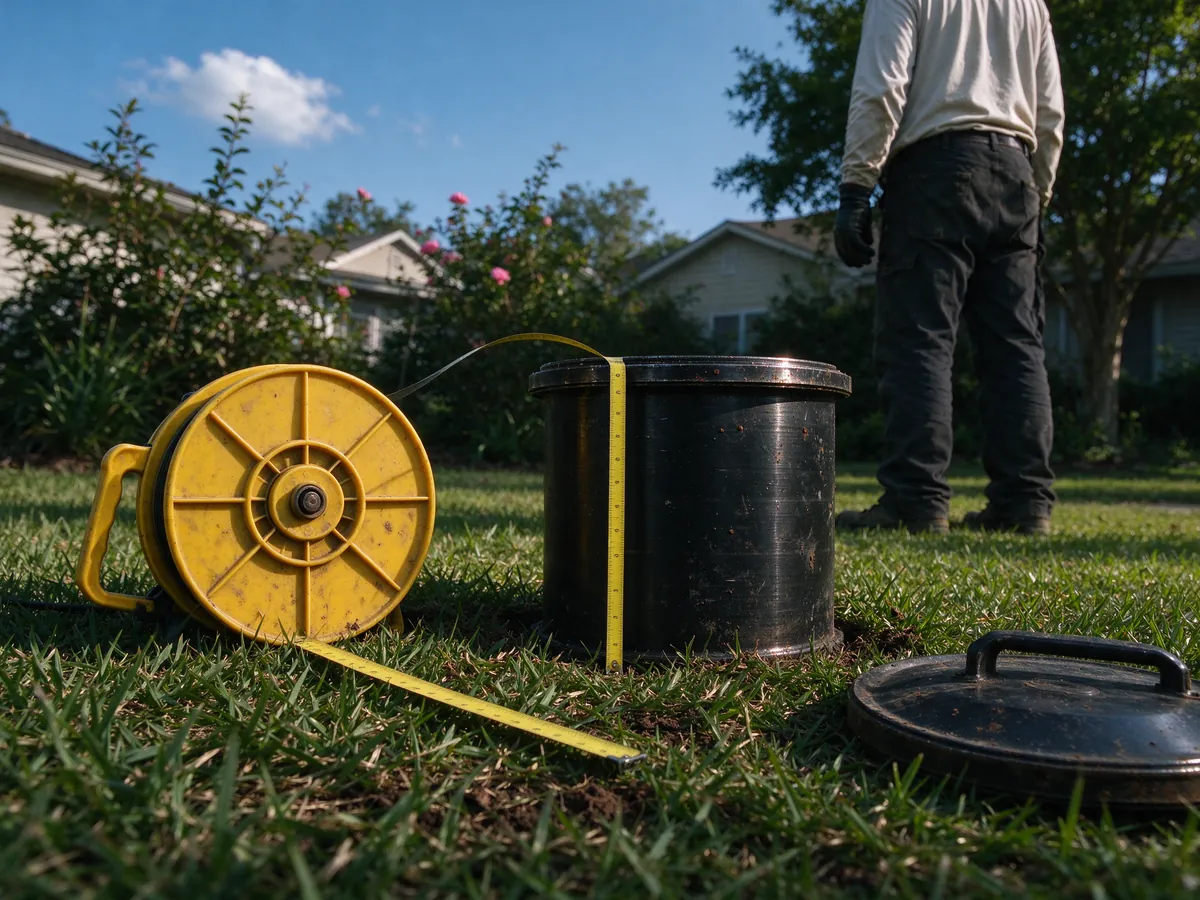
On wells with limited yield, pressure is fine at first and fades during long use: a shower, laundry and an irrigation zone together, or a long watering run in July. The pump draws the water down faster than the aquifer refills it, until the level nears the intake and the pump starts drawing air. In Suffolk, deep wells drawing from confined aquifers rarely run short in normal household use, but shallow wells and wells with a pump set close to the pumping level can. A recovery test, which measures how fast the water level comes back after pumping, shows whether the well is the limit.
If it is, a bigger pump makes things worse. The answers are spreading demand out, lowering the pump if there is room below it, adding storage, or rehabilitating a well whose screen has clogged.
Why a bigger pump is usually the wrong answer
It is natural to think more horsepower means more pressure. But the pump’s job is set by the well depth, the water level, the pressure range and the flow the house needs. A pump bigger than the well can feed draws the level down and short-cycles. A pump bigger than the tank was sized for cycles too. The fix for low pressure is almost always finding the restriction or the shortage, not overpowering it.
Constant pressure as an upgrade
Where the system is sound but the 20 psi swing between cut-in and cut-out is the complaint, a constant pressure system holds one steady pressure by varying the pump’s speed. It suits deep wells and houses with several fixtures in use at once, and it is most economical to add when the pump is being replaced anyway.
A quick check you can do
Turn on a tap and watch the gauge. Note where the pump starts (cut-in), how fast the needle climbs, and where it stops (cut-out). Note whether pressure is low everywhere or only at certain fixtures. If the gauge reads normally but the taps are weak, look at the filter housings first. Those few observations narrow the cause before anyone arrives.
Who does the work
Pressure diagnosis and repairs are carried out by water well systems providers certified through DPOR, Virginia’s licensing department. Replacing a pump, tank or switch needs no Virginia Department of Health well permit, and anything that opens the well is followed by disinfection before the water is used.
Iron, sand and pressure over time
Pressure that fades gradually over months, rather than suddenly, often has a slow cause. Iron and manganese build up inside pipes, valves, filter housings and the pressure switch’s sensing port. Sand wears pump impellers and settles in tanks and fixtures. In the Suffolk extension clinic, iron was above the staining guideline in only a small share of samples, but where it is present, and especially on shallow wells, it accumulates. Cleaning the switch nipple, replacing fouled cartridges on schedule and addressing iron in the water at its source keep pressure from creeping down.
Pressure problems after other work
Low pressure that appears right after other work is usually connected to it. After a plumbing remodel, a valve may have been left partly closed or a new fixture fitted with a flow restrictor. After a water treatment installation, the equipment may be undersized for the household’s flow or set to backwash at the wrong time. After a pump replacement, the switch may still be set for the old pump, or the tank charge may not have been adjusted to the new settings. Tracing what changed is often the fastest route to the cause.
Irrigation and household demand together
Many properties run lawn irrigation off the same well as the house. When a sprinkler zone and a shower run together, pressure drops for both. Scheduling irrigation for times when the house is quiet, splitting large zones, or giving irrigation its own well where the property allows are all ways to keep household pressure steady without asking more of the pump than the well can give.
What is included
- Gauge readings at cut-in, cut-out and during demand
- Flow test at a fixture and at the tank
- Filter and treatment pressure-drop check
- Pressure tank charge and bladder test
- Switch setting review
- Leak trace on the buried line and fixtures
- Pump amp draw and output check
- Water level and recovery check when the pump is suspect
Choosing between the options
| Pattern | Most likely cause | Fix |
|---|---|---|
| Low at every tap, gauge reads normal | Clogged filter or softener, partly closed valve | Change the cartridge, open or replace the valve |
| Pressure swings strong and weak | Waterlogged tank or wrong precharge | Recharge or replace the tank |
| Pressure never reaches cut-out | Worn pump, leak or low water level | Amp, flow and level tests |
| Fine at first, weak after long use | Well yield or a pump set too high | Recovery test, reset or resize |
| One fixture only | Aerator, cartridge or that branch | Fixture repair |