Last Updated: November 5, 2026
Wellborne tests and treats well water across Suffolk and the communities within about 30 miles. The approach is simple: test first, fix the source if the well itself is the problem, and only then choose treatment, sized to what the lab found and how the household uses water. A filter chosen by guessing at the tap often treats the wrong thing.
What Suffolk wells tend to carry
The best local picture comes from a Virginia Cooperative Extension clinic of 204 Suffolk households, nearly all on wells. The results show why clear water proves nothing:
- Fluoride was at or above 2 mg/L in 60% of samples, and above the federal limit of 4 mg/L in 19%. It occurs naturally in parts of the deep aquifers most Suffolk wells reach.
- Sodium was above 20 mg/L in 78% of samples. Some comes from the aquifer and some from water softeners.
- Total coliform bacteria turned up in 21% of samples and E. coli in 2%, usually a sign of surface water reaching the well.
- A rotten-egg smell was reported by about one household in five.
- Iron above the staining guideline was found in only about 3% of samples, but where it occurs it causes stains and fouling.
The clinic is an older, voluntary sample, so it shows the pattern for the area, not the result for your well. In nearby Isle of Wight County, a later extension program found sodium and fluoride among the most common issues and coliform in 62% of its samples.
Testing comes first
A useful test is matched to the well. Lenders usually ask for bacteria, nitrate and lead. For a deep Suffolk well, fluoride and sodium belong on the list. Iron, manganese, hardness, pH and hydrogen sulfide help when there are stains, smells or scale. Samples go to a certified laboratory and are collected so the result reflects the well, not a dirty faucet.
The results are explained against the EPA’s drinking water standards: which numbers are health limits, which are taste and staining guidelines, and which need no action.
Fix the source before treating the water
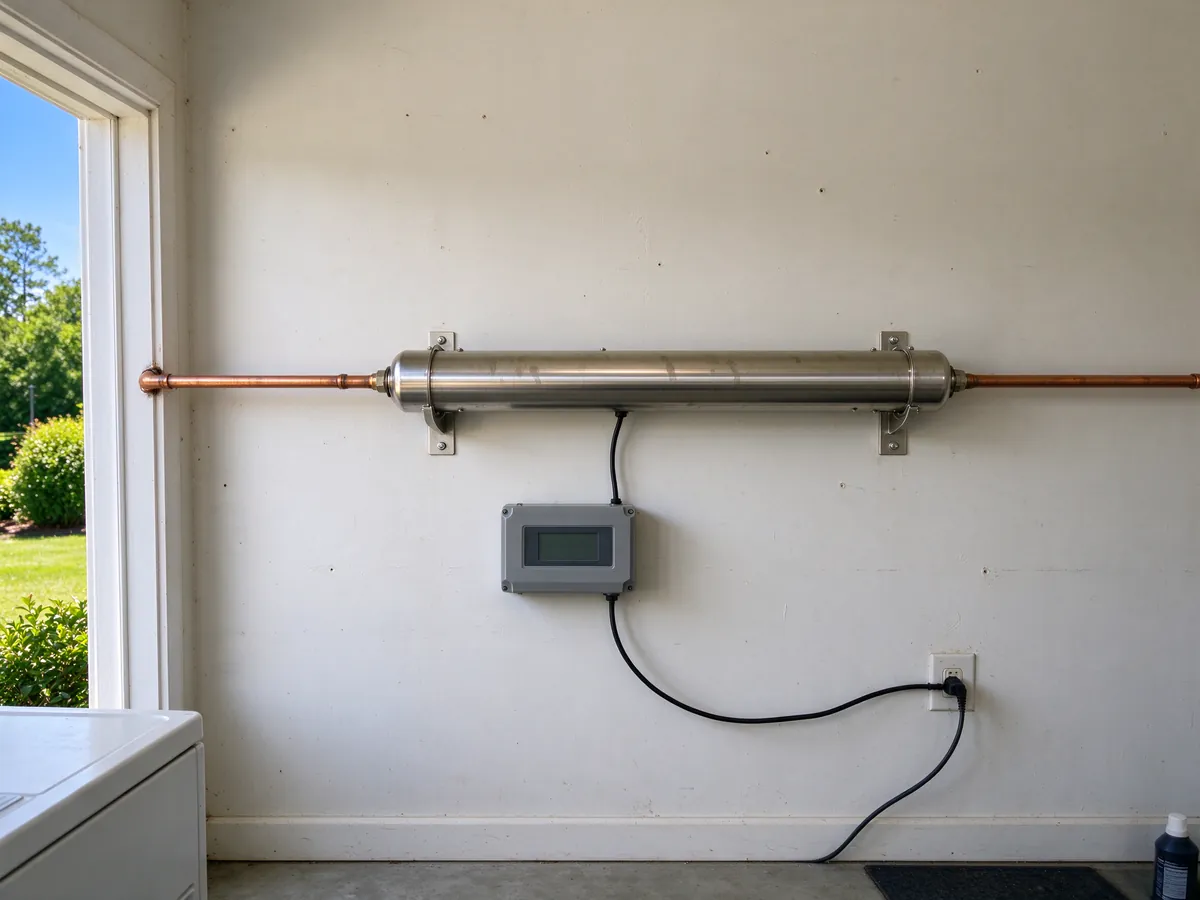
Bacteria in a well almost always mean surface water is getting in: a loose or cracked cap, a casing that ends below grade, failed grout, or flooding. Treating the water without fixing the well treats the symptom indefinitely. So a positive bacteria result starts at the wellhead. The cap, casing, grade and nearby sources are checked and corrected, the well is disinfected, and it is retested. UV disinfection is added only if bacteria keep coming back despite a sound well.
Matching treatment to the problem
- Fluoride and sodium. Reverse osmosis at a kitchen tap is the usual answer for drinking and cooking water. Treating the whole house for these is rarely needed.
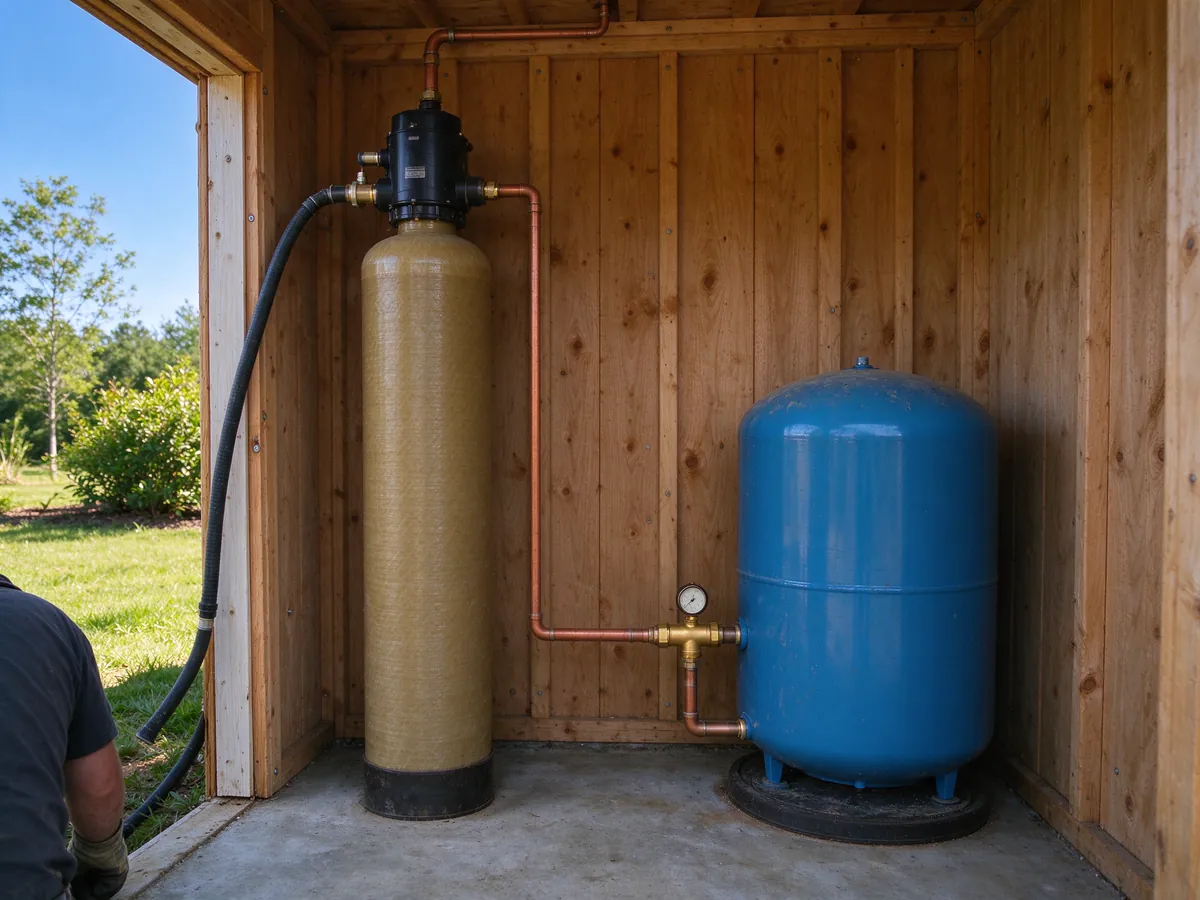
- Iron and manganese. Iron filters are chosen by the type of iron: dissolved iron that turns orange once exposed to air, iron already in particles, or iron bacteria. A softener handles small amounts of dissolved iron, at the cost of adding sodium.
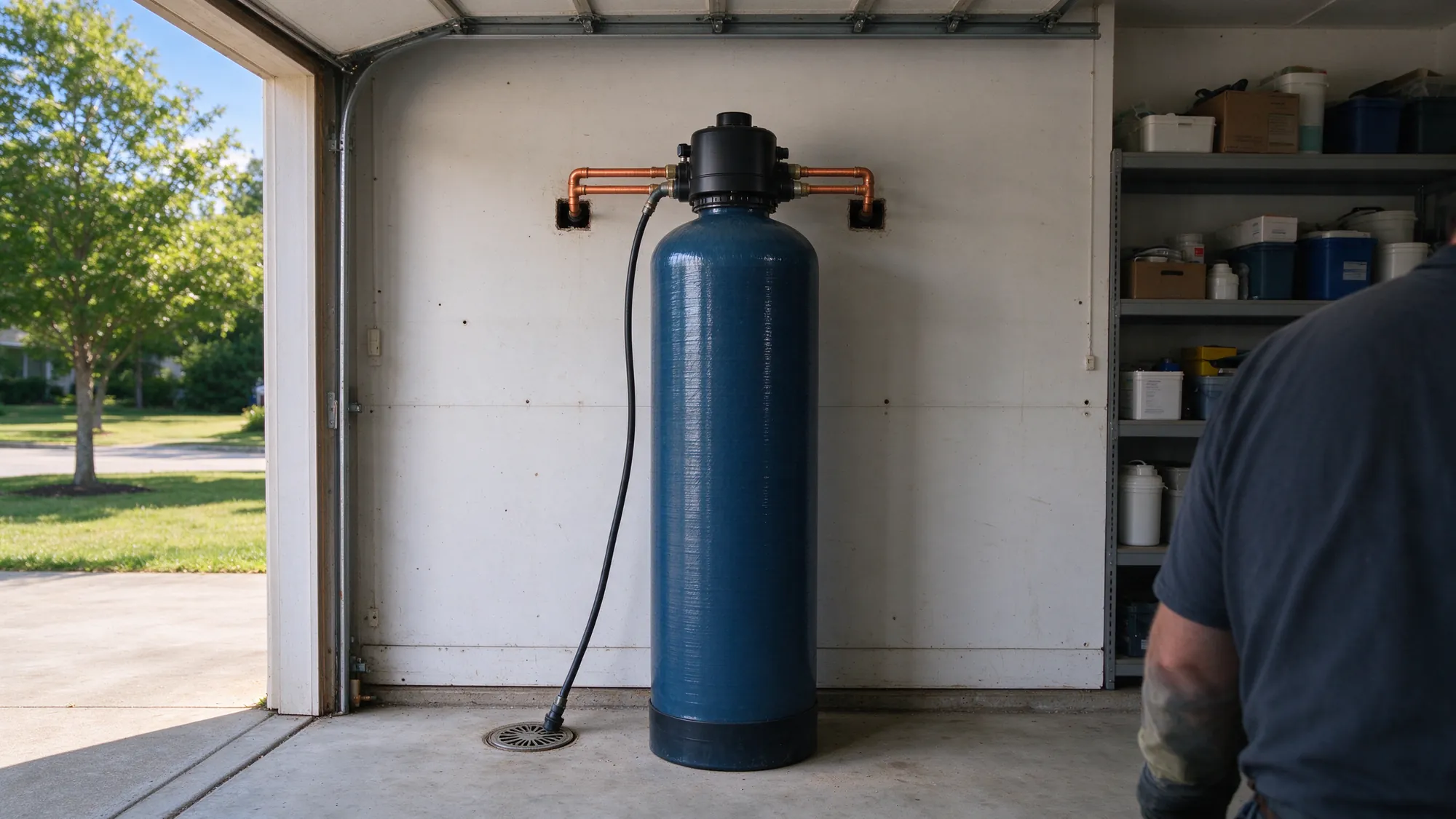
- Hardness. A softener removes the calcium and magnesium that leave scale. On a high-sodium well, a softener bypass for the kitchen tap or a reverse osmosis unit keeps drinking water from getting saltier.
- Hydrogen sulfide. If only the hot water smells, the water heater’s anode is often the cause, and that is fixed at the heater. If cold water smells too, aeration, oxidation or carbon treatment is chosen by the level measured.
- Sediment. A sediment filter protects fixtures, but if a well is producing sand, the cause in the well should be found too.
Sizing and installing
Whole-house equipment has to pass the household’s peak flow without starving the taps of pressure, and backwashing equipment needs enough water from the well to clean itself. Undersized treatment is a common cause of low pressure after installation. Drinking-water units under the sink are sized for a few gallons a day. Each system is installed with bypass valves so it can be serviced without shutting off the house.
After installation
A follow-up test shows the treatment is doing its job. Cartridges, membranes, UV lamps and resin all have service intervals, and treatment that is not maintained can make water worse than no treatment at all. Annual bacteria tests continue regardless, because treatment downstream of the well does not stop a wellhead problem from developing.
Households with infants, pregnancy or health conditions
Some households need a closer look at the water. Nitrate is a particular concern for infants under six months and during pregnancy, and wells near fields and septic systems are more likely to carry it. In the Suffolk extension clinic, 62% of participants reported field crops within half a mile of their well. Fluoride above the federal limit is a concern for children’s teeth and, over many years, bones. Sodium matters for anyone on a sodium-restricted diet. If any of those apply, test for them specifically, and repeat the test if anything changes near the well.
Iron and sulfur in irrigation water
Treatment is not only for drinking water. Iron in an irrigation well stains siding, walks and fences, and iron bacteria clog sprinkler heads and pumps. An iron filter on the irrigation line, or a different source for irrigation, can solve it. The same test that guides household treatment shows which approach fits.
What treatment cannot do
Treatment changes the water after it leaves the well; it does not repair the well. It will not stop surface water entering through a cracked cap, will not restore a well’s falling yield, and will not make a well drawing salty water near the coast fit for a household without large and costly equipment. Where the problem is the well itself, repairing or rehabilitating the well, or replacing it, is often the better investment than treating its water forever.
Who does the work
Testing, wellhead repairs and treatment installation are carried out by licensed and insured water well contractors certified through DPOR as water well systems providers. Laboratory analysis is done by certified labs.
What is included
- Sampling plan matched to the well and household
- Sample collection for a certified lab
- Plain-language review of the results
- Wellhead check where bacteria are found
- Disinfection and retest for bacteria
- Treatment options sized to the household's flow
- Installation of filters, softeners, UV or reverse osmosis
- Follow-up test after treatment is installed
Choosing between the options
| Finding | What it means | Usual treatment |
|---|---|---|
| Fluoride above 4 mg/L | Natural in parts of the deep aquifers; a health limit | Reverse osmosis at a drinking tap |
| High sodium | Aquifer or a softener; matters for low-sodium diets | Reverse osmosis at a drinking tap |
| Coliform or E. coli | Surface water reaching the well | Fix the wellhead, disinfect, retest; UV if it recurs |
| Iron or manganese | Staining, taste, fouling | Iron filter matched to the iron type |
| Rotten-egg smell | Hydrogen sulfide or the water heater | Water heater fix or sulfur treatment |