Last Updated: November 5, 2026
Wellborne diagnoses and fixes wells that have stopped delivering water across Suffolk and the communities within about 30 miles. When the taps go dry, there are four suspects: the power, the controls, the pump and the water in the well. The order they are checked in is what decides whether you pay for a small part or a pump you did not need.
Start with what you can see
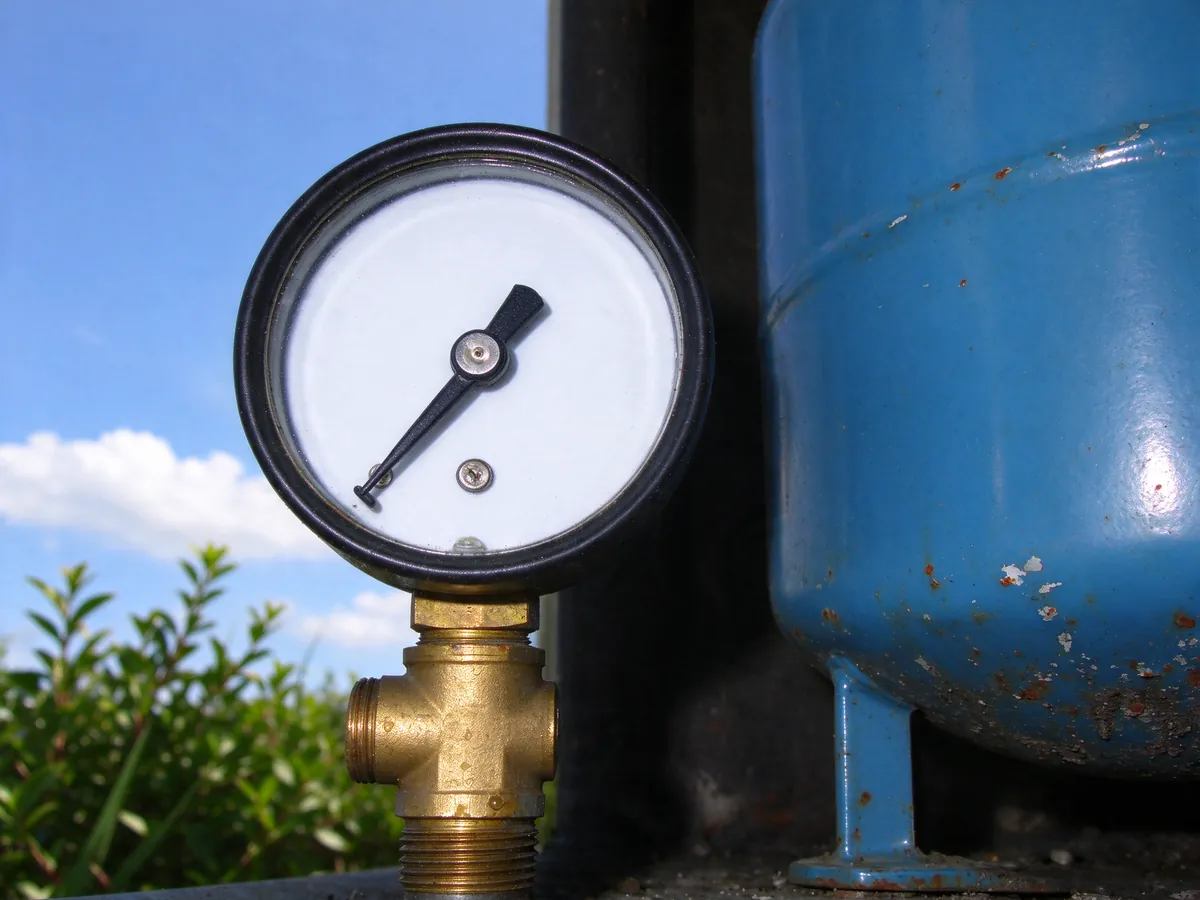
Before anyone opens a box, the pressure gauge and the breaker tell a lot. A gauge at zero with the pump silent and the breaker on points at the switch, the control box or the motor. A tripped breaker that trips again on reset points to a short somewhere between the panel and the motor. A pump humming with no water usually means a start component in the control box. A pump that runs and runs with the pressure stuck low means water is not reaching the tank: a broken pipe, a leaking check valve, or a water level that has fallen below the pump.
Those observations are worth noting before you call. They are often enough to bring the right parts on the first visit.
Power and controls come first
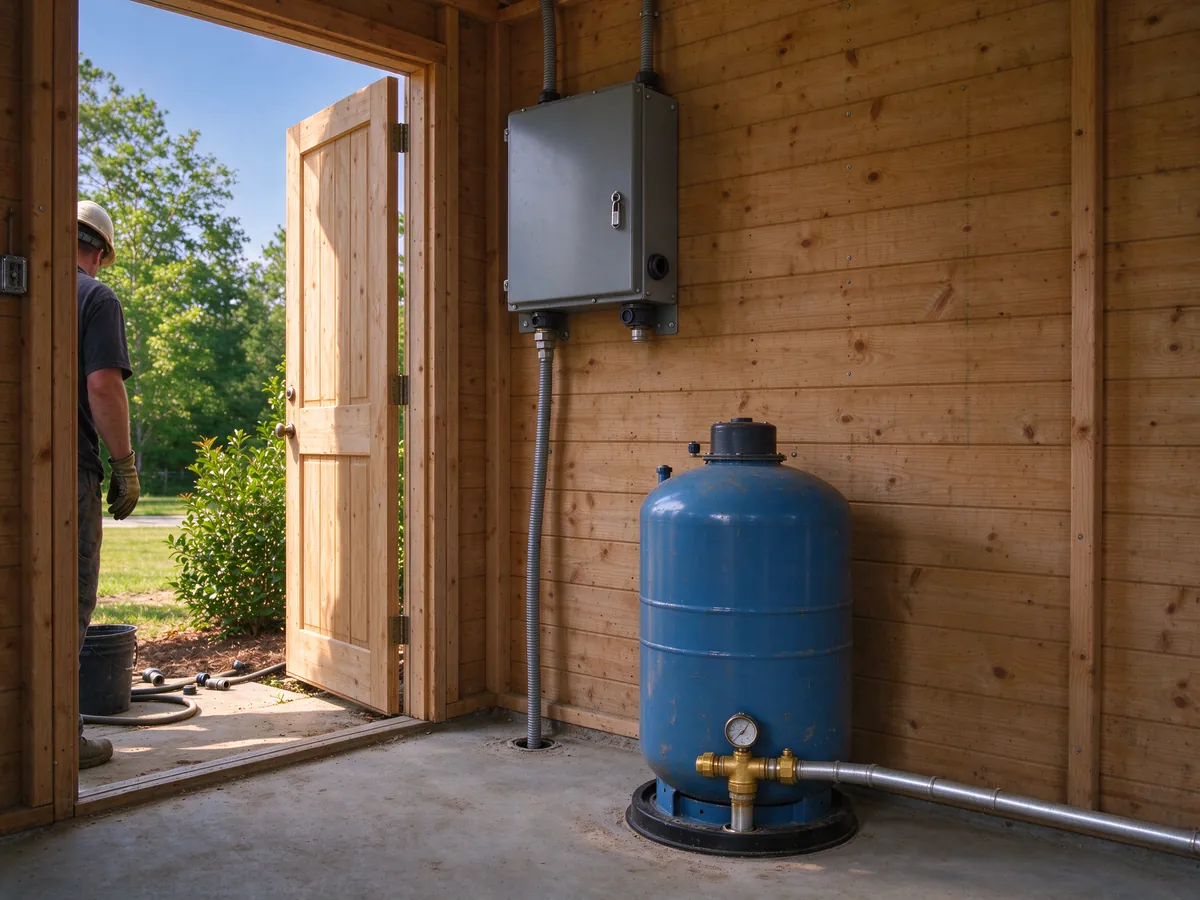
The pump usually runs on its own 240-volt circuit through a pressure switch. Switch contacts burn and pit with age, and a switch with a low-pressure cutoff may have tripped after an outage or a leak. On three-wire submersibles, the control box holds a start capacitor and a relay; when either fails, the motor cannot start. These parts fail more often than pumps do, especially after thunderstorms, and they are all replaced without touching the well.
So the first readings are voltage at the switch and the box, the state of the switch contacts, and the capacitor and relay tests.
Then the pump and the pipe
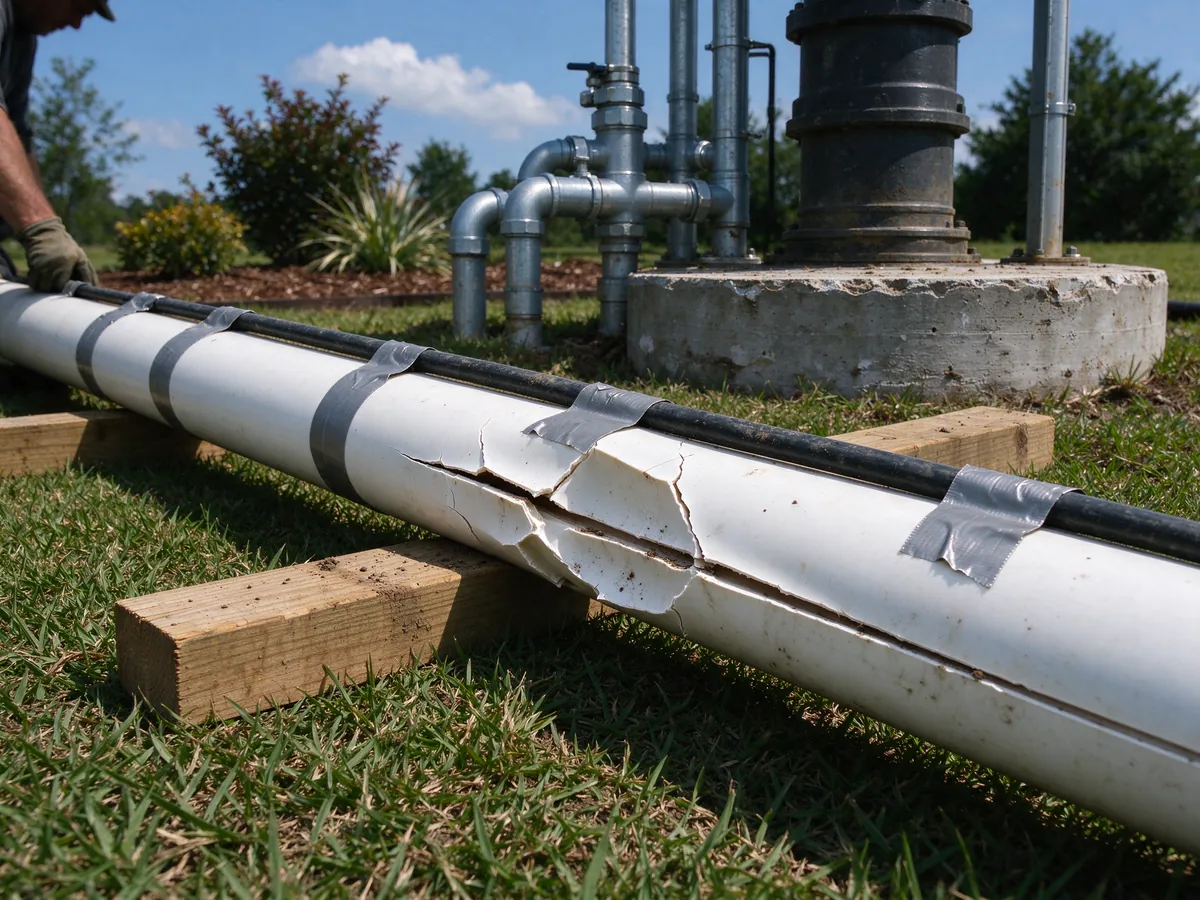
If the controls are sound, the next readings come from the pump circuit itself. An amp clamp shows whether the motor draws current when called to run, and how much. No current with voltage present points to an open circuit in the cable or motor. High current points to a motor struggling against a locked pump or a short. Normal current with no water reaching the tank points to the pipe: a split drop pipe, a parted coupling, or a check valve stuck closed.
An insulation test with a megohm meter, done from the surface, shows whether the motor windings or the cable are breaking down. That decides whether the pump has to come up, and whether it needs replacing or just a new splice when it does.
Then the water level
On deep Suffolk wells drawing from confined aquifers, the well running dry is less common than a failed part. In the Virginia Cooperative Extension clinic of 204 Suffolk households, 59% of owners reported wells deeper than 300 feet. But it does happen, especially on shallow wells, wells with a pump set close to the pumping level, or after a long irrigation run in a dry summer. Regional pumping has also lowered water levels in the deep aquifers over the decades, so a pump set with little margin is the first to feel it.
If the readings point to the well, the water level is checked before any pump is bought. Replacing a pump at the same setting on a well whose level has dropped would leave you with the same problem and a new invoice.
When the pump does come out
A submersible is pulled with its pipe and cable, and everything that comes up is inspected. A failed pump is replaced with one sized to the well’s depth, water level and yield. Splices, check valves and worn pipe are replaced while they are out. The setting may be changed if the old one was too close to the water level or the bottom.
Virginia’s private well rules require a well to be disinfected before it is placed back in service, and replacing a pump does not need a Virginia Department of Health well permit.
Jet pumps and shallow wells
On shallow bored and driven wells with jet pumps, “no water” usually means the pump has lost its prime. Air has got into the suction side through a cracked fitting, a worn foot valve or a falling water table. Priming it again works until the leak opens up. The suction side is pressure-tested to find the leak, which is cheaper than a new pump that would lose prime the same way.
Things not to do
- Do not keep resetting a breaker that trips immediately. Each reset can damage a motor that might otherwise be saved.
- Do not leave a pump running dry. Without water flowing past it, a submersible motor overheats quickly.
- Do not open the pressure switch or control box with the power on. Both carry full line voltage.
- Do not pour water down the well to “prime” a submersible; it does not help and can introduce bacteria.
After the water comes back
Once the water is running, the system is run through full cycles to check the pump reaches cut-out and shuts off, the tank holds its charge, and nothing leaks. If the well was opened, the water should not be used for drinking until it has been disinfected, flushed and a bacteria test comes back clear. If the cause was a surge or lightning, it is worth asking about a lightning arrester to protect the new parts.
Why “no water” is rarely just one thing
The parts of a well system depend on each other, so one failure can cause another. A waterlogged tank makes the pump cycle until the switch contacts burn out. A leaking check valve makes the pump start against a draining column, which strains the motor and the capacitor. A pump that has been running dry overheats and damages its own windings. When the water comes back, the first failure and anything it caused are both fixed, or the call comes back a few weeks later.
What is included
- Breaker, voltage and pressure switch checks
- Control box capacitor and relay tests
- Amp draw on the pump circuit
- Megohm test on motor and cable
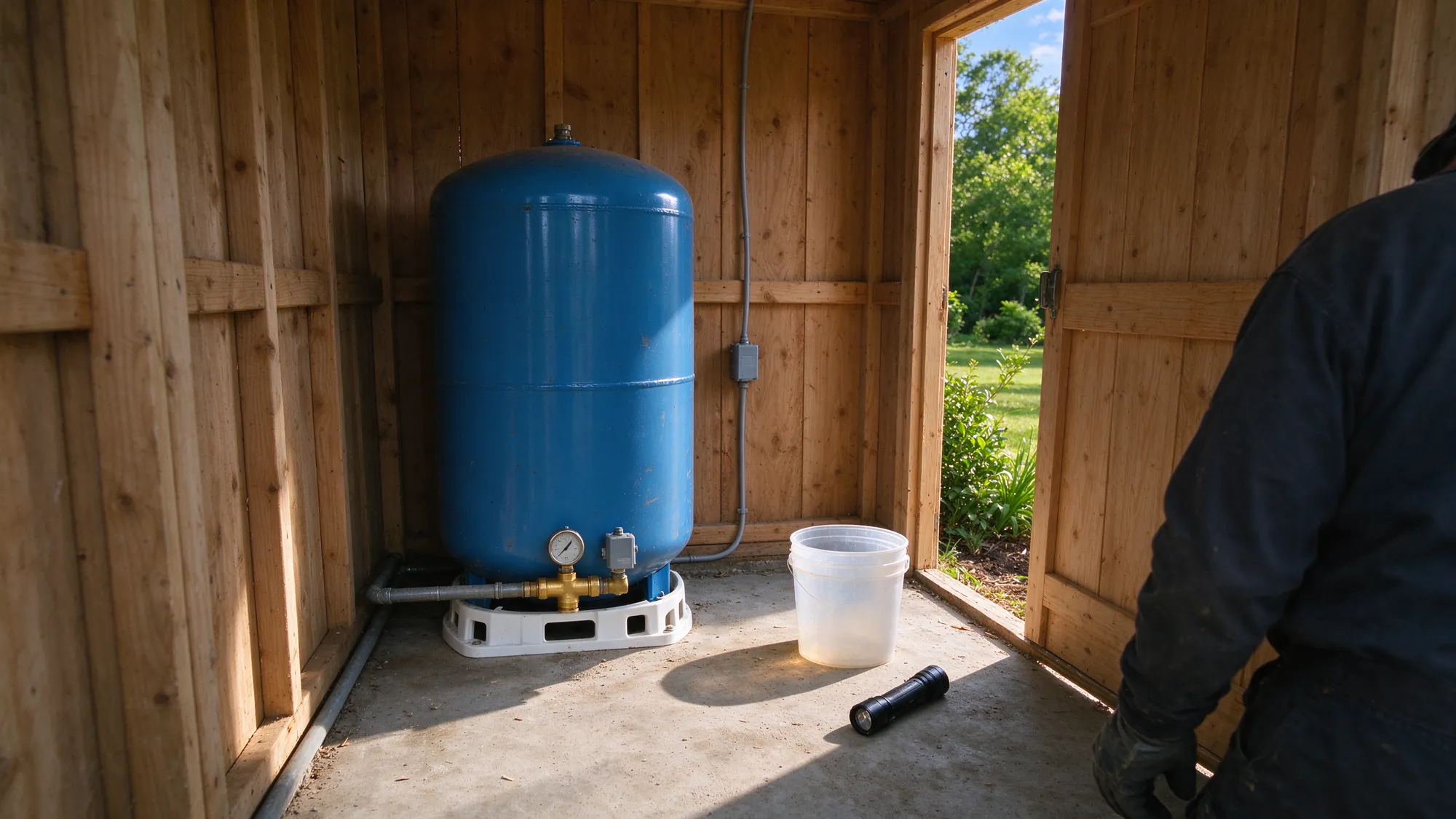
- Check of the tank, tee and visible plumbing for leaks
- Water level check where the readings point to the well
- Repair at ground level or a pump pull, as the tests decide
- Disinfection before use if the well is opened
Choosing between the options
| What you see | What it usually means | Next step |
|---|---|---|
| Gauge at zero, pump silent, breaker on | Switch, control box or a dead motor | Voltage and control tests |
| Gauge at zero, breaker tripped | Short in the wire, motor or capacitor | Insulation test before resetting again |
| Pump humming, no water | Start capacitor or relay, or a locked pump | Control box test |
| Pump running, pressure not rising | Broken drop pipe, check valve or low water | Amp draw and water level |
| Water came back weak after resting | Water level falling to the pump | Water level and yield check |