Last Updated: November 5, 2026
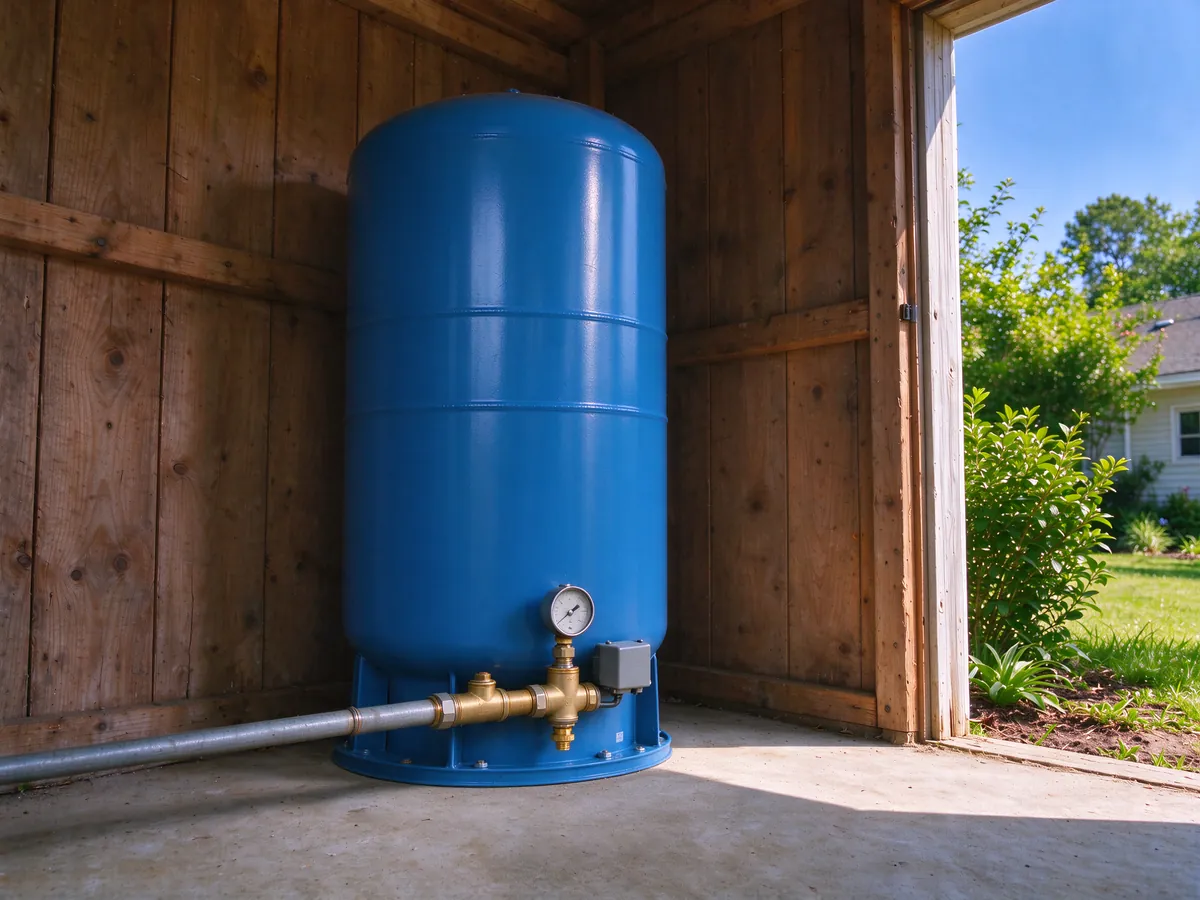
Wellborne replaces and recharges well pressure tanks across Suffolk and the surrounding area. The tank is the cheapest major part of a well system and the one most often responsible for wearing out the expensive one: a tank that has lost its air cushion makes the pump start every few seconds, and every start heats the motor and wears the switch.
What the tank actually does
A modern well tank holds a sealed cushion of air above a rubber bladder or diaphragm. When the pump runs, water fills the bladder and compresses the air. When a tap opens, the compressed air pushes water out until the pressure falls to the switch’s cut-in point and the pump starts again. That stored water, called the drawdown, is what lets you take a drink or wash your hands without starting the pump.
The drawdown is far smaller than the gallon size printed on the tank. A tank sold as 40 or more gallons may deliver only a fraction of that between cut-out and cut-in, depending on the switch settings. What matters is that the pump runs long enough each time to cool its motor and seat its check valves.
Signs the tank is failing
- Rapid cycling. With a tap running, the pump clicks on and off every few seconds instead of running steadily.
- A tank that sounds full. Tap the top: a healthy tank sounds hollow above the water; a waterlogged one sounds solid all the way up.
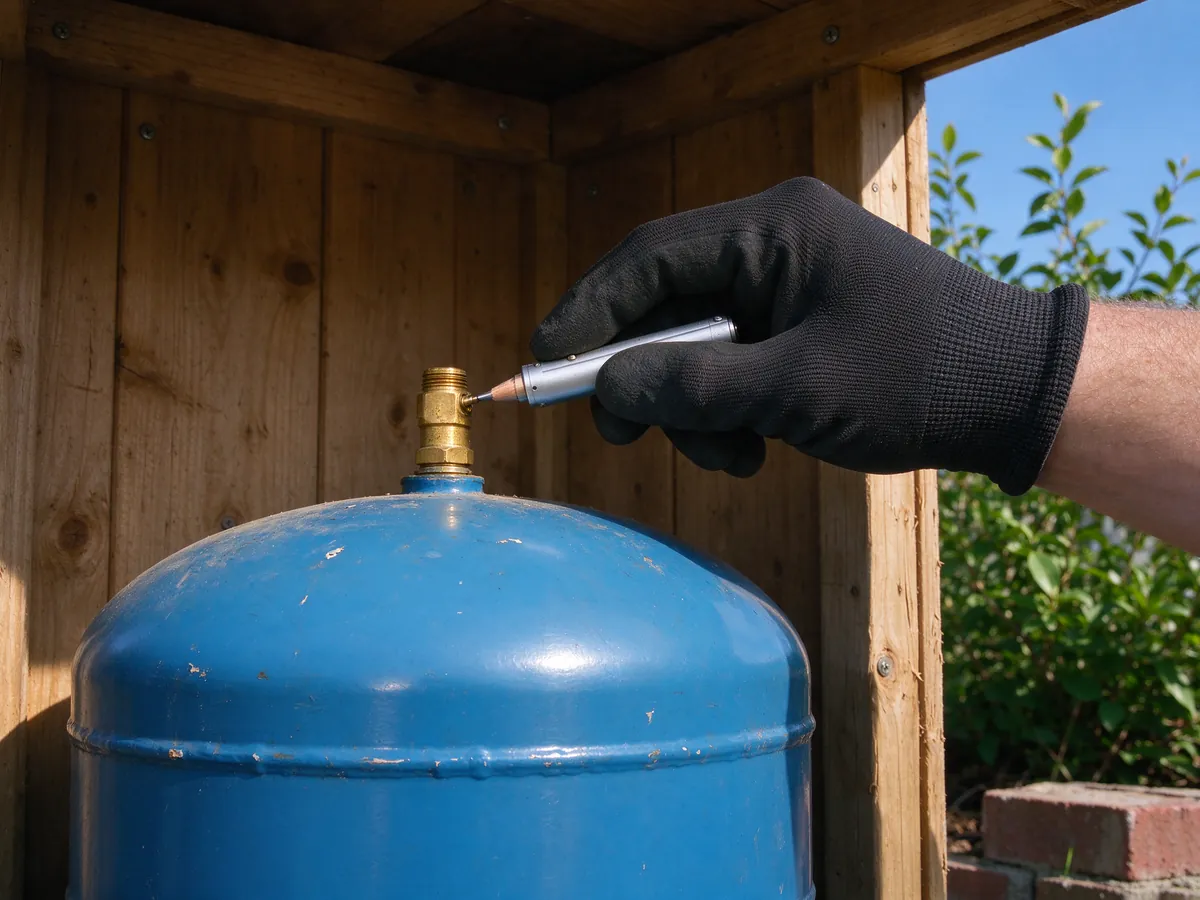
- Water at the air valve. Press the valve core on top. Air should come out; water means the bladder is torn.
- Pressure swings. The gauge drops fast and climbs fast, and the shower goes strong-weak-strong (low or pulsing pressure has other causes too).
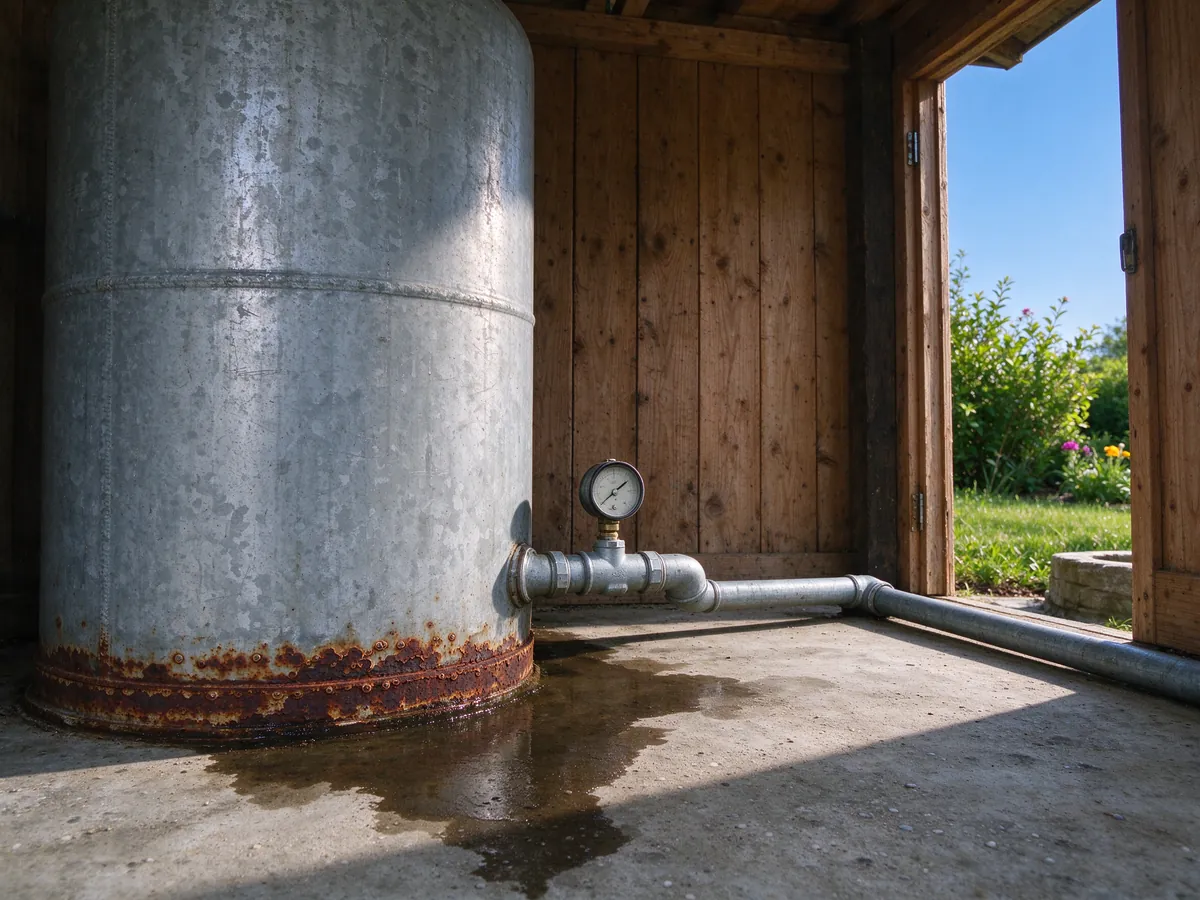
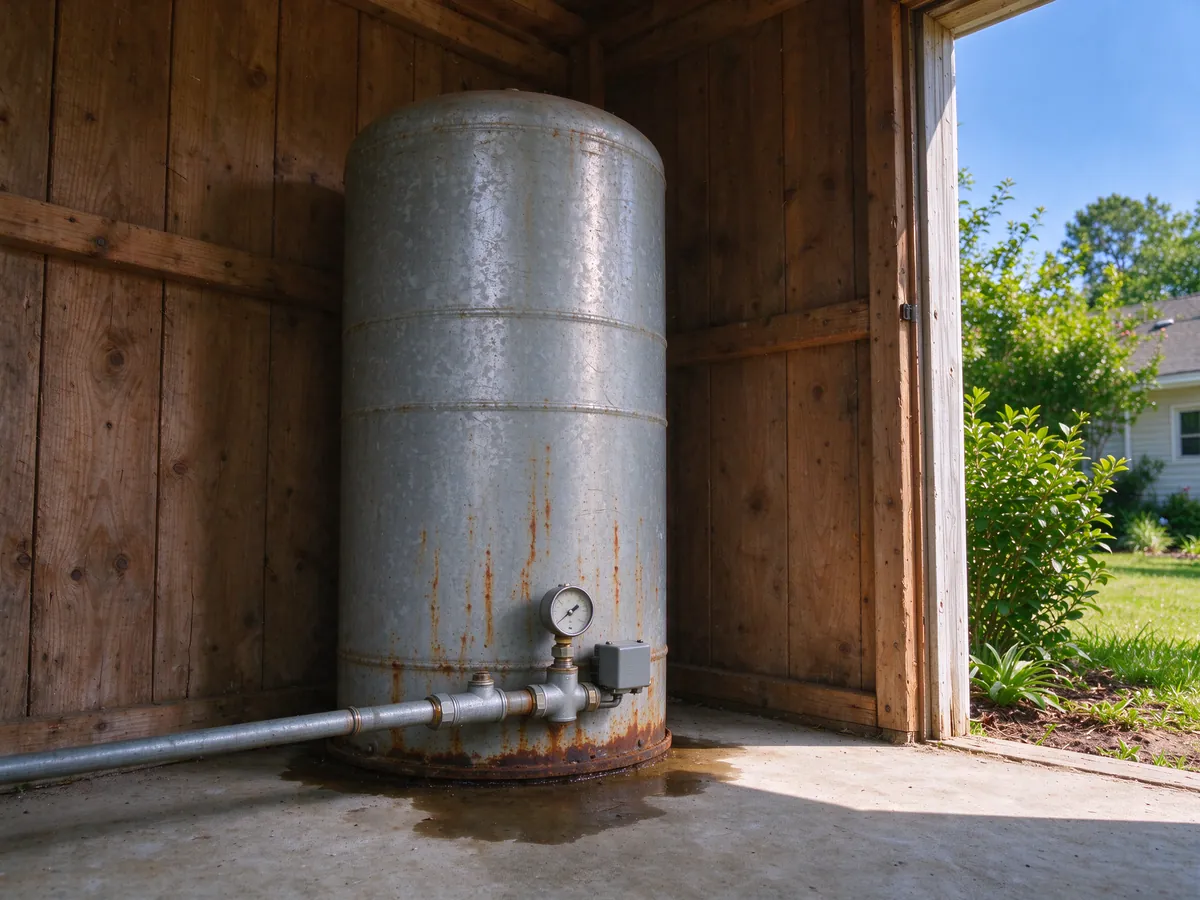
- Rust or weeping. Corrosion at the seams or base, or water under the tank.
Checking and setting the air charge
The charge is read with the pump switched off and the tank drained, so there is no water pressure on the bladder. It should sit about 2 psi below the switch’s cut-in pressure: 38 psi for a 40/60 switch, 28 psi for 30/50. Too much air and the tank holds little water; too little and the bladder stretches and fails early.
A tank that has lost a little air over years can be recharged. One that loses its charge again within weeks, or spits water at the valve, has a failed bladder and is replaced.
Sizing a replacement
A replacement tank is sized to the pump, not to the space it has to fit. Pump manufacturers set a minimum run time for their motors, and the tank’s drawdown has to be large enough, at the pump’s flow rate, to keep each run above it. A bigger pump needs more drawdown. On deep Suffolk wells, where pumps are often larger to lift water several hundred feet, an undersized tank is a common reason a newer pump fails early.
Where the space will not take a large tank, two smaller tanks can be piped together, or a constant pressure system can reduce the tank needed.
The tank tee, gauge and switch
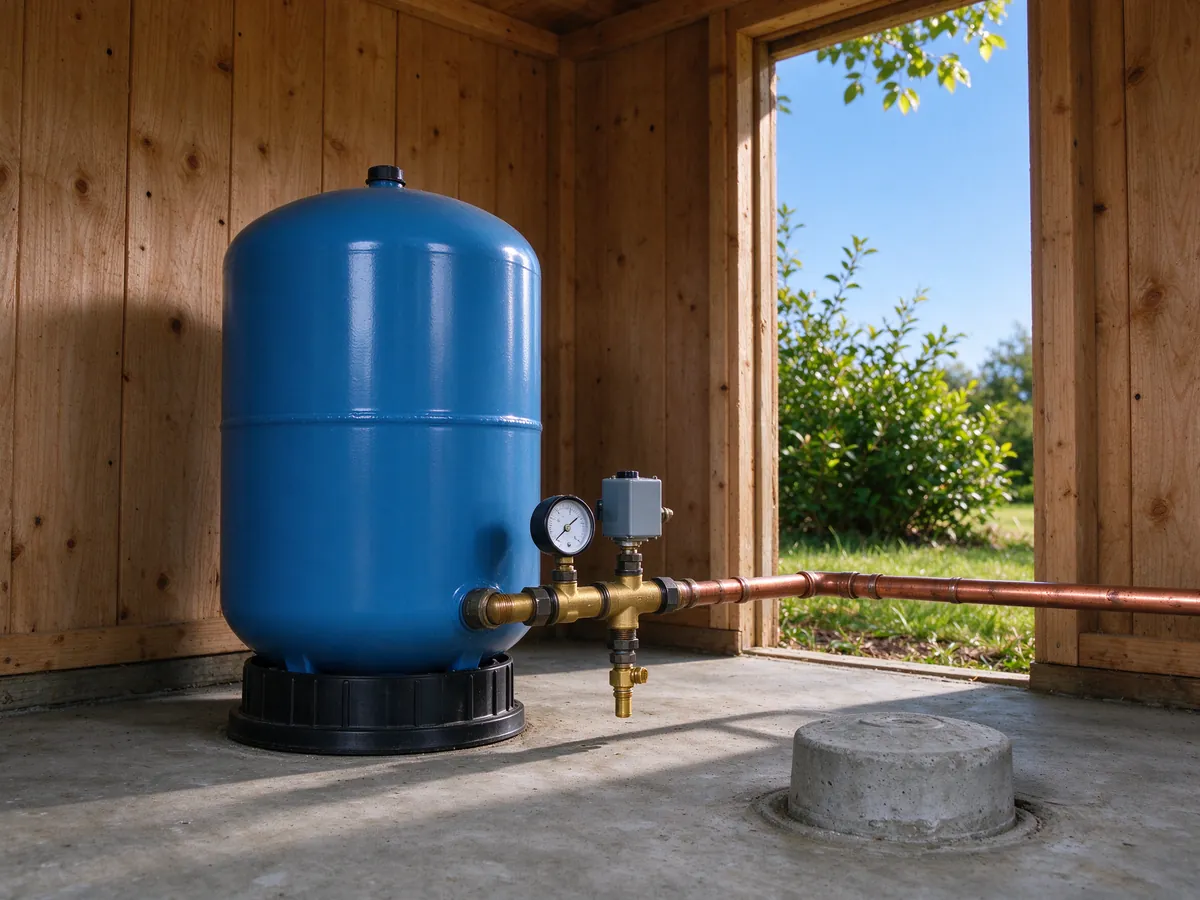
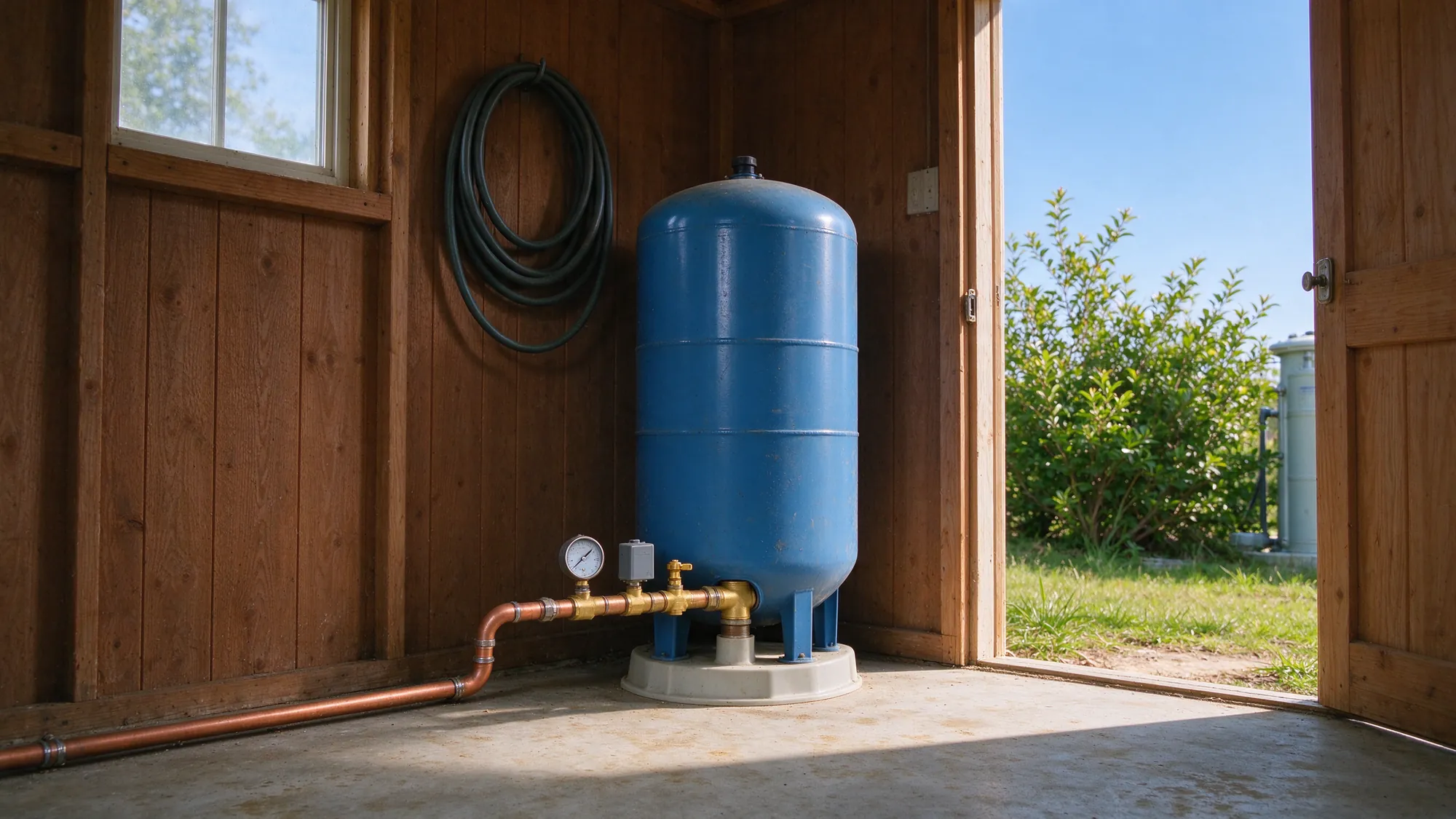
Tanks are usually installed on a tank tee: a manifold that holds the pressure switch, the gauge, a drain valve and often a relief valve. When the tank is replaced, the tee and its parts are inspected too. A clogged switch nipple or a gauge stuck at one reading can mimic a tank fault, and a corroded tee often leaks once it is disturbed. Replacing them while the system is drained avoids a second visit.
When the tank is not the problem
A good tank on a system that still cycles points elsewhere: a dripping fixture or a leak in the buried line, a toilet flapper, an irrigation zone left on, a check valve letting water drain back down the well, or a pressure switch set with too narrow a range. Those get traced before a new tank goes in, so the tank is replaced only when it is the cause.
Older galvanized and air-volume tanks
Some older homes still have a plain steel tank with no bladder, where air and water mix inside. These tanks slowly lose their air into the water and need an air volume control or periodic draining to stay charged. Replacing one with a bladder tank usually ends the problem. Where the old tank was in a crawlspace or well house, the new one can often go in the same spot, but the floor or base needs to carry the weight of a full tank.
Inside a well house or crawlspace
Many Suffolk tanks sit in small well houses or under the house. Access matters for the job: the old tank has to come out full of sediment and water, and the new one has to fit without blocking the switch or the valves. A tank on a level, solid base with room to reach the air valve is easier to check every year, which is the simplest maintenance a well system gets.
A once-a-year tank check you can do
Once a year, it is worth a five-minute look. Watch the gauge with a tap running: the pump should start at the cut-in pressure and run steadily, not in bursts. Tap the side of the tank from top to bottom and listen for the change from solid to hollow where the water ends. Look at the base and fittings for rust or damp. If anything has changed from last year, the air charge is the first thing to have checked.
Relief valves and safety
A pressure relief valve on the tank tee or the pump discharge lets water out if a switch sticks and the pump keeps running against a closed system. Without one, pressure can climb far above the tank’s rating. Relief valves themselves can corrode shut or start dripping. They are checked and replaced as part of a tank job, because a tank is only as safe as the parts that protect it.
Who does the work
Replacing a pressure tank does not involve the well itself, so no Virginia Department of Health well permit is needed. The work is carried out by water well systems providers certified through DPOR, the state’s licensing department, and the system is tested through full cycles before we leave.
What is included
- Precharge check with the system drained
- Bladder and diaphragm test
- Cycle timing at a running tap
- Tank sizing against the pump flow
- New tank, tee, gauge and drain where needed
- Pressure switch inspection and setting
- Relief valve check
- Full-cycle test after installation
Choosing between the options
| Situation | Likely cause | Fix |
|---|---|---|
| Pump clicks on every few seconds | Tank lost its air charge or bladder failed | Recharge or replace the tank |
| Tank sounds full when tapped at the top | Waterlogged: no air cushion | Replace if the bladder is torn |
| Pressure swings hard at the shower | Tank too small or charge wrong | Correct the charge or upsize |
| Rust at seams or water at the base | Tank shell failing | Replace the tank |
| Good tank, still cycling | Leak, check valve or switch | Trace the leak or replace the part |