Last Updated: November 6, 2026
Wellborne arranges new and replacement water wells across Suffolk and the communities within about 30 miles, from household drinking wells on new lots to replacement wells for failing ones and shallow irrigation wells. A new well is a permitted construction project in Virginia, and most of the important decisions are made before the rig arrives.
The permit comes first
Since November 6, 2024, Virginia’s private well regulations require a written construction permit from the Virginia Department of Health before anyone constructs, alters, deepens or abandons a private well. In Suffolk, that goes through the Western Tidewater Health District. The permit fee is $300. The application includes a site plan, and the health department may set conditions on where and how the well is built. A permit is valid for 18 months, with one 18-month renewal.
After construction, the well cannot be put into service until the department issues an inspection statement.
Where the well can go
On most rural lots, the septic system decides where the well goes. Virginia’s setbacks keep a well at least:
- 15 feet from a building foundation (10 feet in some borate-treated cases),
- 50 feet from a septic tank or other pretreatment unit,
- 50 or 100 feet from a drainfield, including the reserve area, depending on the well’s construction class,
- 10 to 50 feet from a house sewer line, depending on its pipe and whether the well is cased and grouted to the water-bearing formation.
A sanitary survey also looks for fuel tanks, chemical storage, abandoned wells and other contamination sources within 200 feet. A replacement well cannot be placed closer to a contamination source than the well it replaces. Rig access matters as well: a drilling rig and its support truck need firm ground, overhead clearance and room to work, which can rule out an otherwise legal spot.
What lies underneath
Suffolk sits on Virginia’s Coastal Plain: layers of sand, clay, silt and shell hundreds of feet thick, with aquifers separated by clay confining units. In the Virginia Cooperative Extension clinic of 204 Suffolk households, 59% of owners reported wells deeper than 300 feet and the average was 371 feet. USGS mapping found the Yorktown-Eastover aquifer absent in the southwestern part of the city, so wells there have to reach deeper units.
Deeper confined aquifers give better protection from surface contamination and steadier supply through dry summers. They also tend to carry more sodium and, in many wells, more natural fluoride. Those trade-offs are part of choosing a target depth.
Why depth and yield cannot be promised
Nobody can guarantee the final depth or the gallons per minute before the bit reaches the water. Nearby well records and published geology give a planning depth and a reasonable expectation, but the formations at a particular spot are only known once they are drilled. An honest quote explains how depth affects the price and what happens if the planned depth is not enough.
How the well is built
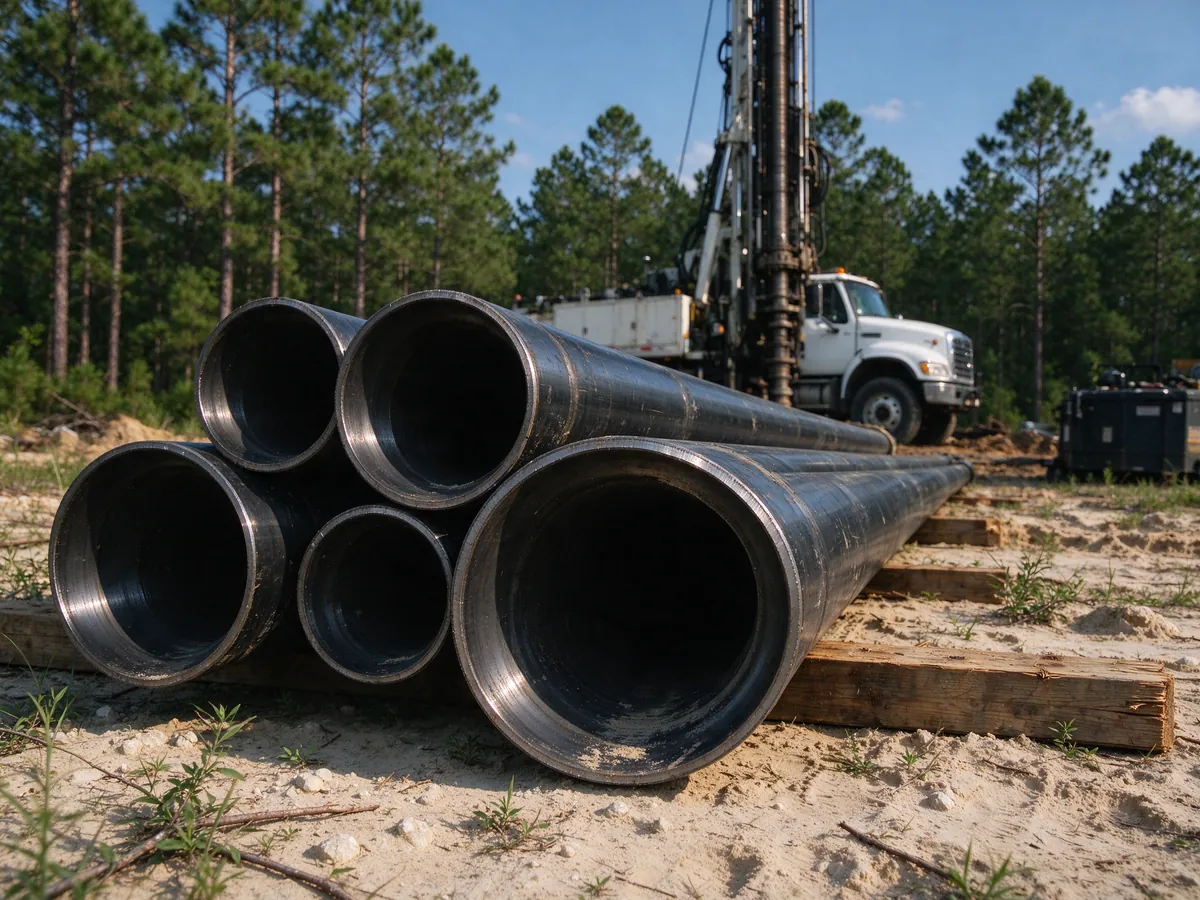
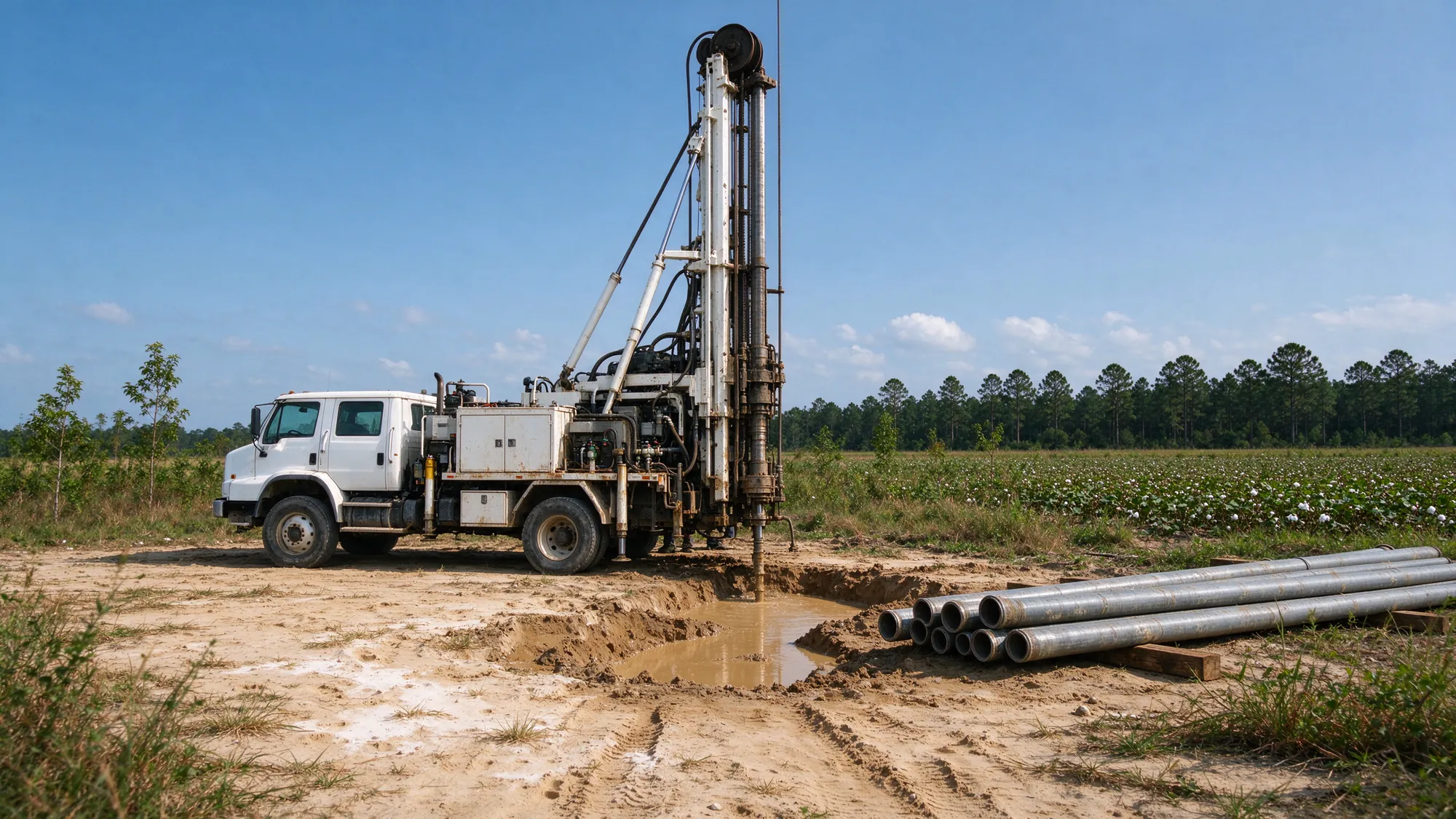
Drilling advances the bore while collecting formation samples for the driller’s log. Steel or PVC casing lines the bore to hold it open and seal out shallow water; a screen sits in the aquifer where the water enters. The annular space around the casing is grouted to the depth the regulations and permit require, which is what stops surface water from running down the outside of the casing. The driller notifies the health department before construction so an inspector can observe if they choose.
After drilling, the well is developed, pumping and surging to clear fine sediment from around the screen, and then tested by pumping at a steady rate while measuring the water level. That test sets the pump size and setting.
Equipping the well
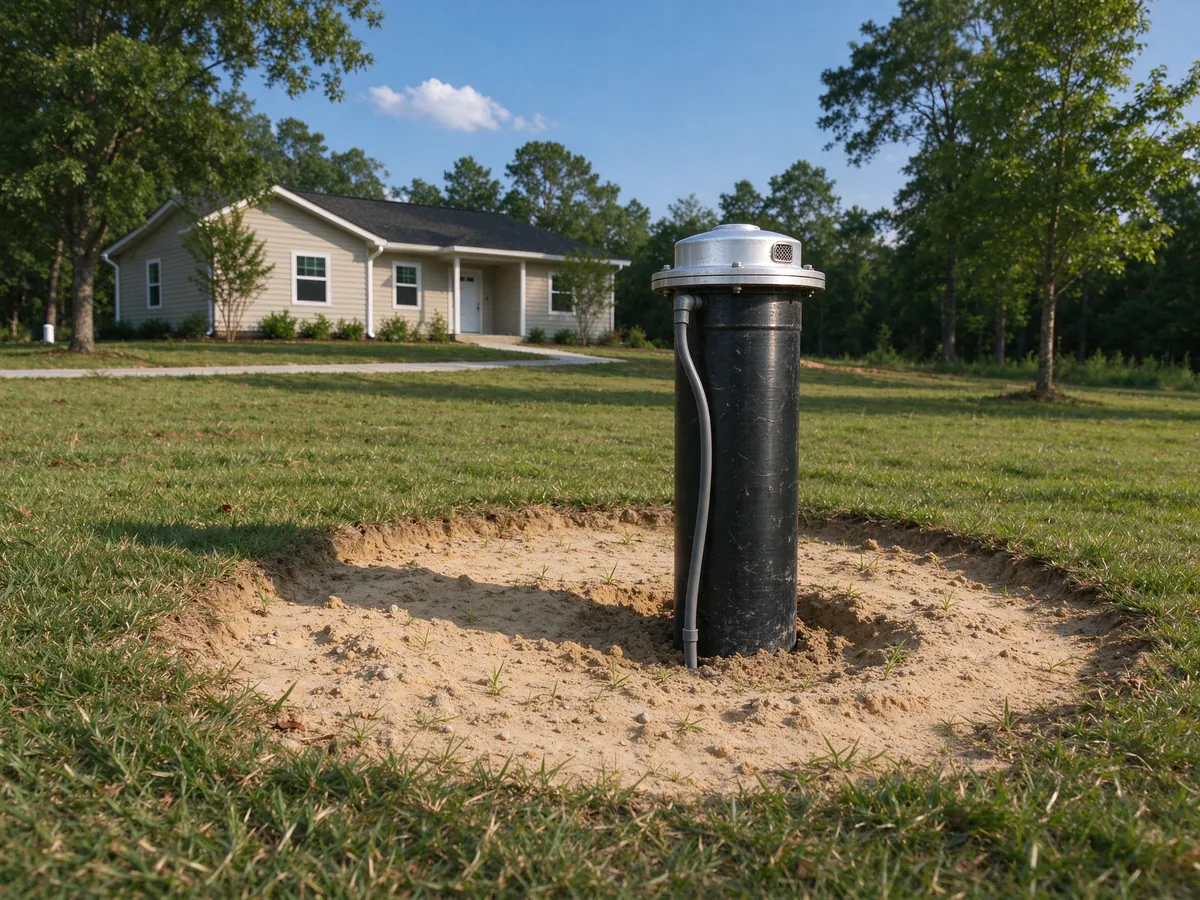
The pump, drop pipe, tank and controls are chosen from the test results: the static and pumping levels, the yield, and the household’s needs. A pitless adapter carries the water line out of the casing below ground, and a sanitary cap seals the top. Before the water is used, Virginia requires the well to be disinfected, with a minimum chlorine strength and contact time set in the regulation, and a bacteria sample confirms the result.
Replacement wells
A well with a cracked or collapsing casing, failed grout, or water that has turned salty or poor is often better replaced than repaired. Replacement wells for emergencies receive priority in the permit queue. Once the new well is in service, the old one has to be properly abandoned: checked for obstructions, chlorinated and filled with approved grout, so it cannot become a channel for contamination.
Irrigation and other wells
Not every well is a drinking well. Irrigation, geothermal and agricultural wells are permitted too, and non-drinking wells carry different construction classes. In Virginia Beach, the Health Department offers a Class IV Express Well Application for non-potable wells on properties without an active septic system. Large agricultural wells that will pump 300,000 gallons or more in a month also need a Virginia DEQ withdrawal permit.
Records you keep
A finished well comes with a completion report describing its depth, casing, grout and the formations encountered, the yield test, and the health department’s inspection statement. Those papers answer most questions anyone will ever ask about the well, from a future pump replacement to a home sale.
Who does the work
Wells are constructed by water well systems providers certified through DPOR, Virginia’s licensing department, under the VDH permit for the site.
What to have ready
- A plat or sketch of the lot showing the house, driveway, septic tank and drainfield.
- Any existing well records, including old wells on the property that will need sealing.
- What the well must supply: a household, irrigation, livestock or a business.
- Access details: gates, overhead lines, soft ground and trees near the likely site.
With those, the permit application and the siting conversation move quickly, and any surprises about access or setbacks surface before the rig is booked rather than on the day it arrives.
What is included
- Permit application support and site plan
- Siting around setbacks, septic systems and rig access
- Drilling with formation samples for the driller's log
- Casing and grout to the permit's requirements
- Well development and a yield test
- Pump, tank and controls sized to the finished well
- Disinfection and bacteria sample before use
- Completion report and records for your files
Choosing between the options
| Situation | Usual answer | Why |
|---|---|---|
| New lot with no water supply | New well, permit first | Siting decided by setbacks and the septic plan |
| Old well with failing casing | Replacement well, old one sealed | Casing failure lets surface water in |
| Old well with reduced yield | Test, then rehabilitate or replace | Clogged screens can often be restored |
| Shallow bored well, poor water | Drilled well to a deeper aquifer | Better protection from surface contamination |
| Irrigation supply only | Shallow non-potable well | Lower cost; different permit class |