Last Updated: November 5, 2026
Wellborne installs constant pressure well pump systems across Suffolk and the surrounding area, most often on deep wells when the pump is being replaced anyway. A conventional system lets the pressure swing between the switch’s cut-in and cut-out, a 20 psi drop that shows up in the shower. A constant pressure system holds one pressure by changing how fast the pump runs.
How it works
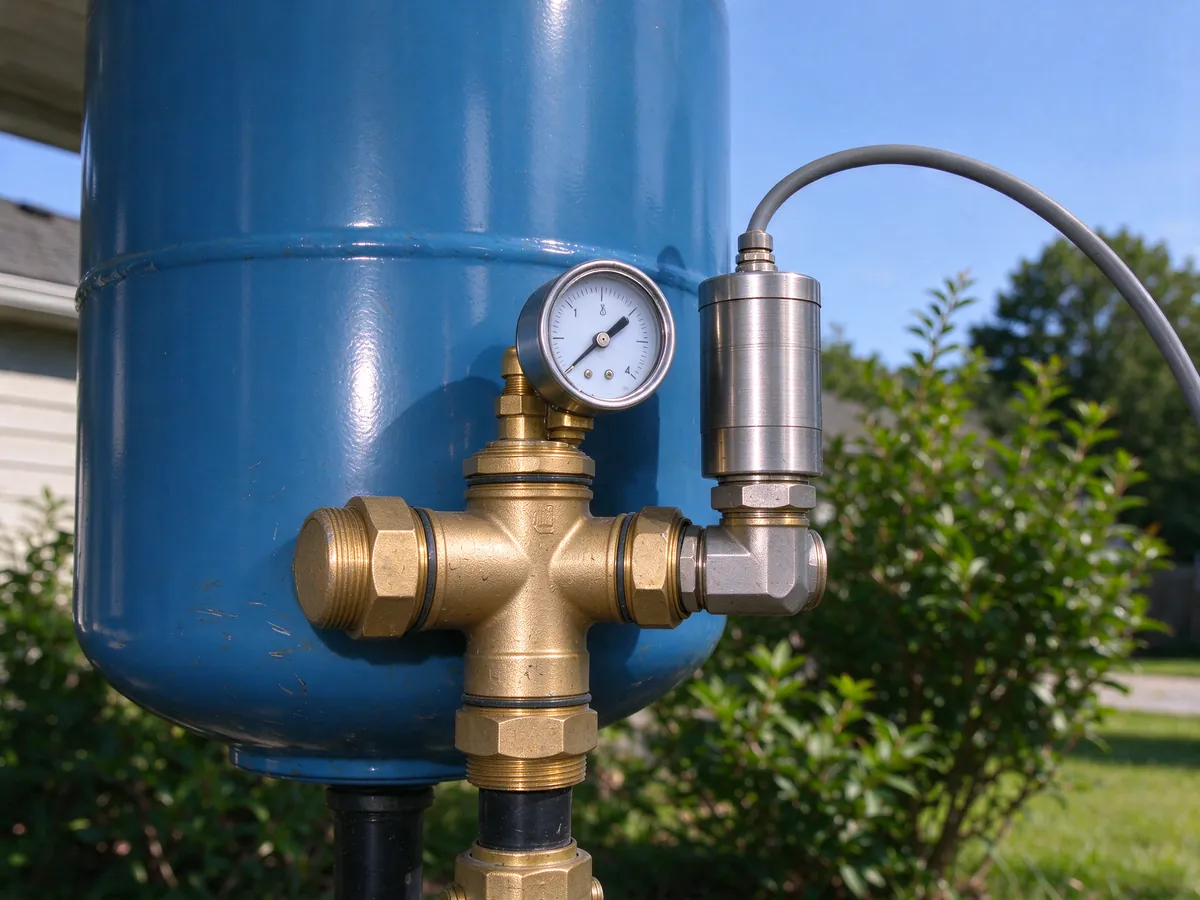
A conventional pump runs at full speed or not at all. A pressure switch turns it on at, say, 40 psi and off at 60 psi, and the tank supplies water in between. A constant pressure system replaces the switch with an electronic drive and a pressure sensor. When a tap opens and pressure starts to fall, the drive speeds the motor up just enough to hold the setting. One tap gets a slow pump; a shower, a washing machine and an irrigation zone together get a fast one.
Because the drive ramps the motor up gradually, the hard full-voltage start of a conventional system is gone. That matters on deep Suffolk wells, where the motor has to start a column of water several hundred feet tall and the long cable takes the strain of every start.
When it makes sense
- Deep wells with a pump replacement due. The pump is coming out anyway, so a compatible motor and cable can go in without a second pull.
- Larger homes and mixed demand. Several bathrooms, irrigation and a household running at once is where steady pressure is most noticeable.
- No room for a big tank. A constant pressure system needs only a small tank.
- Short-cycling history. Systems that wore out pumps by cycling benefit from the drive’s control of run time.
It makes less sense on a small shallow well with a jet pump and modest demand, where a correctly sized tank and switch do the job simply.
Compatibility comes first
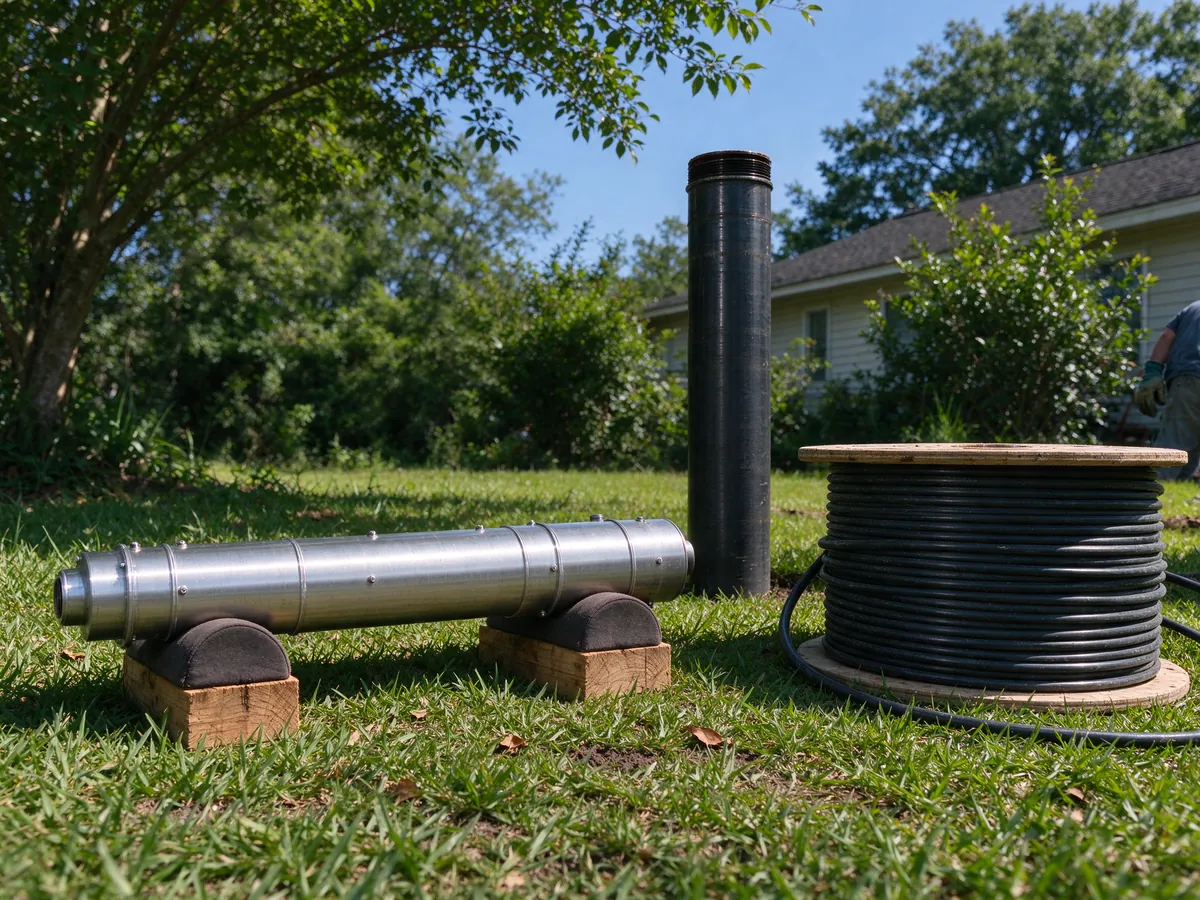
Not every drive runs every motor. Some systems use a three-phase motor driven from the house’s single-phase supply; others drive standard single-phase submersibles. The existing motor’s type, voltage and horsepower decide whether it can stay, and the cable has to be sized for the drive’s output and the depth. A drive on the wrong motor or undersized cable will fault or shorten the motor’s life.
We check the motor nameplate or records, the cable size and the well depth before recommending a system. If the motor cannot be driven, the drive goes in when the pump is next pulled, with a matched motor.
The trade-offs
A constant pressure system is more complex than a switch and tank. The drive is electronic, and electronics in a damp well house or garage need ventilation and protection from surges, which are common in Hampton Roads thunderstorms. A failed drive can stop the water just as a failed switch can, and its parts cost more. In exchange, you get steadier pressure, gentler starts and a smaller tank.
Drives also include protections a simple switch lacks: dry-run detection that stops the pump if the well is drawn down, and fault codes that point to what went wrong. Knowing what those codes mean saves a lot of guesswork later.
Sizing with the well
The drive and pump have to suit the well’s yield as well as the house’s demand. A constant pressure system will happily run a pump faster when several taps are open, and on a well with limited yield that can draw the water level down to the pump. The static and pumping water levels, measured when the pump is out, decide the maximum the system should deliver. On most deep Suffolk wells that is not a constraint, but on shallower or weaker wells it is.
Installation and after
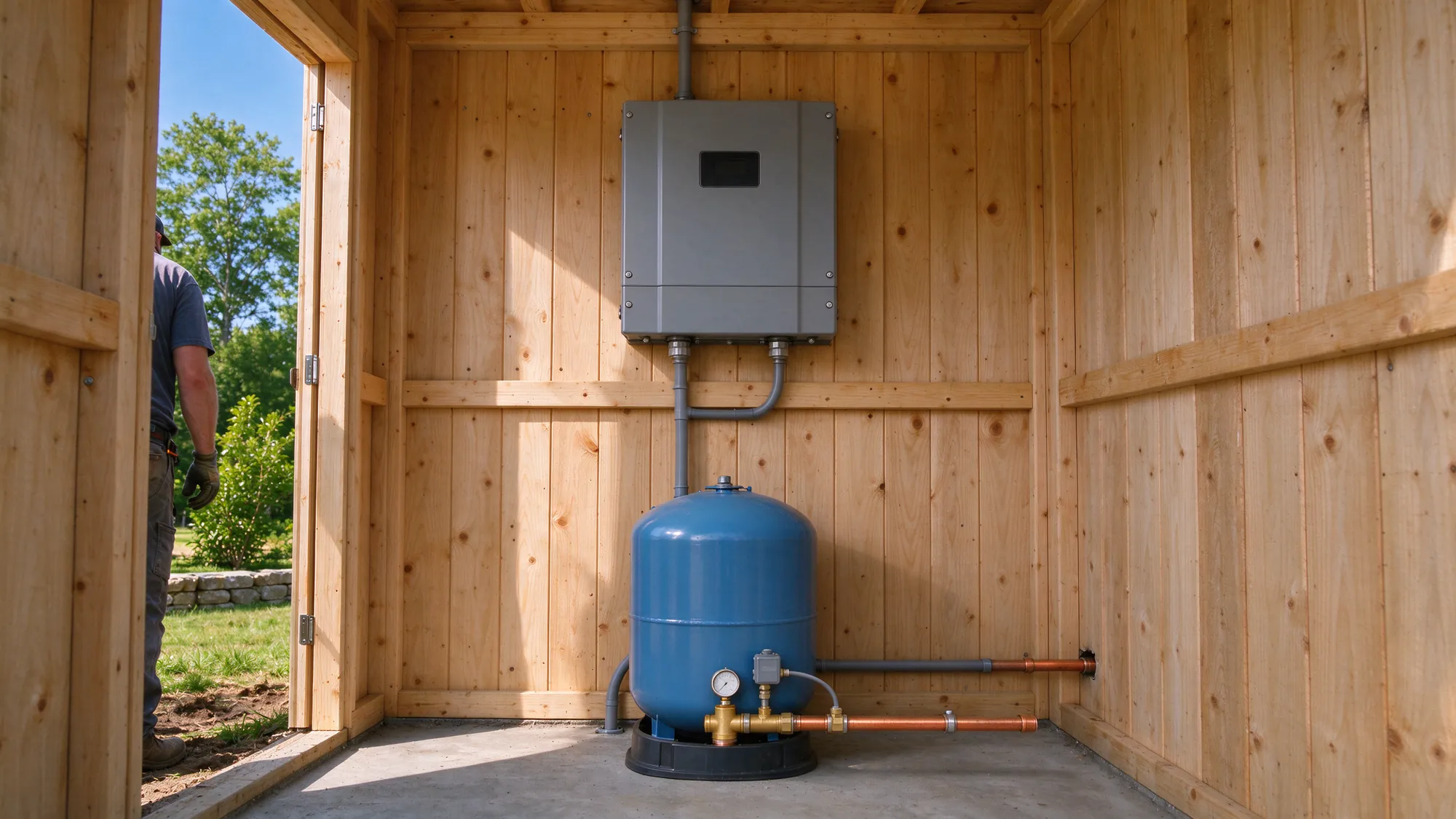
Installation means mounting the drive near the panel or tank, fitting the pressure sensor and small tank on the tee, running the wiring, and, where needed, pulling the pump to change the motor and cable. If the well is opened, it is disinfected before the water is used, as Virginia’s private well rules require. Replacing a pump or its controls does not need a Virginia Department of Health well permit, though electrical work at the house follows the local code. The system is set and then tested from a single tap up to several outlets at once.
Living with a drive
A constant pressure system mostly runs out of sight, but a few habits help. Keep the drive’s vents clear of dust, cobwebs and stored boxes; heat is what shortens electronic life. Note the pressure setting so you notice if it drifts. If the water stops, read the drive’s display before resetting anything: the fault code usually says whether the cause was a dry-run cutout, a power problem, an overload or a sensor fault, and that tells the next visit where to start.
Power interruptions are worth knowing about. After an outage, most drives restart on their own; some hold a fault until they are reset. If the drive is on a generator during an outage, the generator has to be large enough and stable enough for the drive’s input, which varies by model.
Questions to ask before choosing one
- Can the existing motor and cable be driven, or does the pump need changing?
- What pressure will the system hold, and can the well supply the peak flow at that pressure?
- Where will the drive be mounted, and is that spot dry and ventilated?
- What surge protection is included?
- What happens if the drive fails: is there a simple way to keep water running while it is repaired?
Clear answers to those questions are what separate a constant pressure installation that runs quietly for years from one that becomes the weak link in the system.
Who does the work
Constant pressure installations are carried out by water well systems providers certified through DPOR, Virginia’s licensing department. The drive’s wiring, surge protection and any new circuit at the panel follow the local electrical code, and anything that opens the well is followed by disinfection before the water is used.
What is included
- Check of the existing motor, cable and well
- Drive, pressure sensor and tank sized together
- Compatible motor where the existing one cannot be driven
- Wiring from the panel to the drive and down the well
- Pressure setting and dry-run protection configured
- Disinfection if the pump is pulled
- Full test at several demands
- Explanation of the drive's fault codes
Choosing between the options
| Conventional switch and tank | Constant pressure drive | |
|---|---|---|
| Pressure at the tap | Swings between cut-in and cut-out | Held near one setting |
| Motor start | Full voltage, hard start | Ramped soft start |
| Tank size | Sized for minimum run time | Small tank |
| Parts | Simple switch and tank | Electronic drive and sensor |
| Storm sensitivity | Switch and capacitor | Drive electronics need surge protection |