
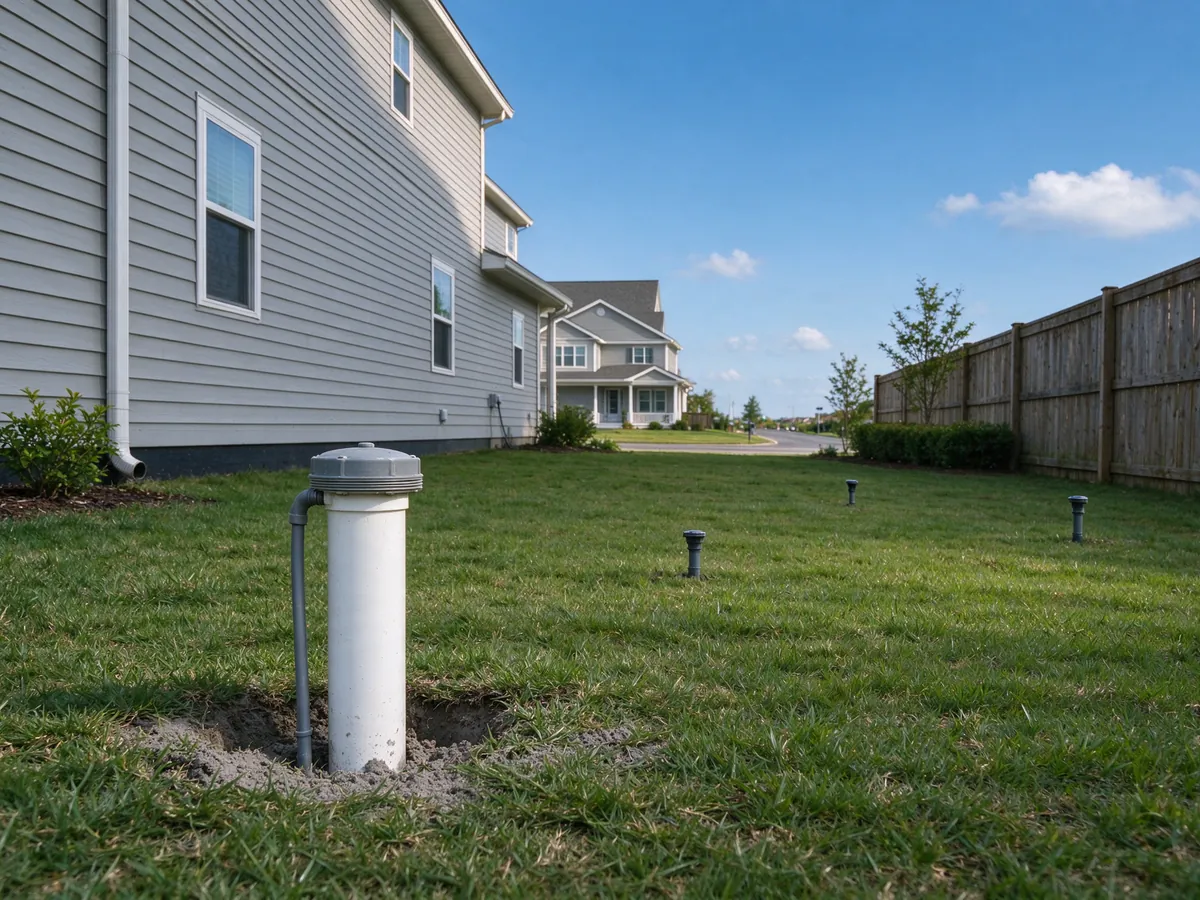
Wellborne repairs and replaces well pumps across Virginia Beach, with most of the work on the shallow wells that water lawns, gardens and farms in the city. Pump repair, jet pump replacement, pressure tanks, iron filtration and new well permits are all handled for Virginia Beach properties from the Suffolk side of the region.
Virginia Beach wells are a different job from Suffolk’s
West of here, in Suffolk, most household wells reach several hundred feet into the deep aquifers. Virginia Beach is the opposite. USGS reports that groundwater in northern Virginia Beach is used mainly for non-drinking needs, irrigation above all, since a pipeline able to carry up to 45 million gallons a day came online in early 1998. A few communities still drink groundwater, but most private wells in the north of the city water lawns and gardens. The Hampton Roads Planning District Commission counts more than 20,000 private wells in northern Virginia Beach’s shallow aquifer, serving irrigation, ground-source heat pumps and, in some places, household use.
That changes the equipment. A shallow irrigation well usually runs a jet pump or a small submersible, often with a pressure tank in a garage, shed or crawlspace. The problems that bring a call are the shallow-well ones: lost prime, suction leaks, worn foot valves, weak sprinkler pressure in high summer and iron staining.
Deeper is not always better here
When a shallow well weakens, the instinct is to drill deeper. In Virginia Beach that can go badly. USGS reports that the groundwater system under the city extends more than 1,000 feet down, but water below roughly the upper 150 to 200 feet is too saline to drink or irrigate with, and in some parts of the city chloride above the EPA’s 250 mg/L secondary standard turns up even at shallow depths. Because pumping from thousands of wells can pull water levels below sea level, USGS and the city run a real-time chloride monitoring network.
The practical result is that a weak Virginia Beach well is usually repaired, cleaned or replaced at a similar depth rather than taken deeper, and any new well is planned around the salty layer, not just the water table.
How a Virginia Beach job usually runs
Most calls start with the pump running and the sprinklers sputtering or weak. We check the pressure switch and tank first, then the jet pump’s prime and the suction side. A pressure test on the suction line finds the small air leaks that make a jet pump lose prime again and again. If the foot valve at the bottom of the suction pipe is leaking back, the pump loses its prime overnight.
When the pump itself is worn, the replacement is sized to the lift and the number of sprinkler zones it has to run, not just matched to the old label. On wells with a casing large enough, a small submersible can replace a struggling jet pump and end the priming problems.
Permits and the Virginia Beach Health Department
New wells, deepening and abandonment all need a Virginia Department of Health permit. In Virginia Beach the Health Department’s environmental health office handles private wells, including site evaluations for setbacks from septic systems, termite-treated foundations, retention ponds, agricultural fields and underground oil tanks. It permits domestic, irrigation, geothermal and agricultural wells.
For a non-drinking (Class IV) well on a property with no active septic system, the department offers a Class IV Express Well Application, which the property owner and the well driller sign. Replacing a pump on an existing well does not need a well permit at all under the state’s private well rules.
Iron, sulfur and what the water does to equipment
Shallow groundwater in Virginia Beach often carries iron, and in places sulfur. USGS lists chloride, iron and sulfur as the reasons groundwater cannot be used in many parts of the city. For an irrigation well, iron means orange stains on siding, walks and fences, and iron bacteria that slime up the pump and the sprinkler heads. An iron filter on the irrigation supply, regular cleaning, or changing which surfaces the heads spray are the usual answers. If a well serves a house, testing for bacteria, iron and chloride comes first.
Pungo, Blackwater and the rural south
South of the city’s urban area, Pungo, Blackwater, Creeds and the land around Back Bay are rural, with farms, larger lots and longer runs from well to house. Whether a southern Virginia Beach property relies on a well for household water is confirmed per address, and so are the setbacks that decide where a new well can go on a lot with a septic system. Farm wells that pump 300,000 gallons or more in a month need a separate state withdrawal permit from Virginia DEQ.
Heat pump wells and other open-loop systems
The HRPDC count of shallow wells includes ground-source heat pump supply, and the Virginia Beach Health Department permits geothermal wells alongside irrigation and drinking wells. An open-loop heat pump that draws from a well depends on the same pump, switch and tank as an irrigation system, but it runs year-round and cannot tolerate short cycling or iron fouling. If a heat pump well is losing flow, the pump and the well screen are checked before the heat pump itself is blamed. Whether a particular system is open-loop or closed-loop, and who services the heat exchanger side, is confirmed for each property.
Spring start-up and the first hot spell
Irrigation wells sit idle through the winter and then run for hours a day as soon as the weather warms. That first heavy week is when weak foot valves, cracked suction fittings and tired pressure switches show up. Before the season, it is worth running each zone while watching the pressure gauge: a needle that drops quickly and recovers slowly, or a pump that runs without stopping, points to a problem that is cheaper to fix in April than in a July dry spell. If the pump loses prime after sitting, the foot valve is the first suspect.
Choosing between repair, replacement and a new well
Most Virginia Beach calls end in a repair or a same-depth replacement. A new well makes sense when the old one has collapsed, its screen is clogged beyond cleaning, or the water has turned salty or iron-laden enough to ruin what it touches. A new well is sited around septic setbacks and planned around the salty water at depth, and the permit comes from the Virginia Beach Health Department before any drilling starts.